
What Five of Swords yes or no means
Upright: No, because your likely win carries too high a cost.
Reversed: Maybe, because your conflict needs real repair before agreement.
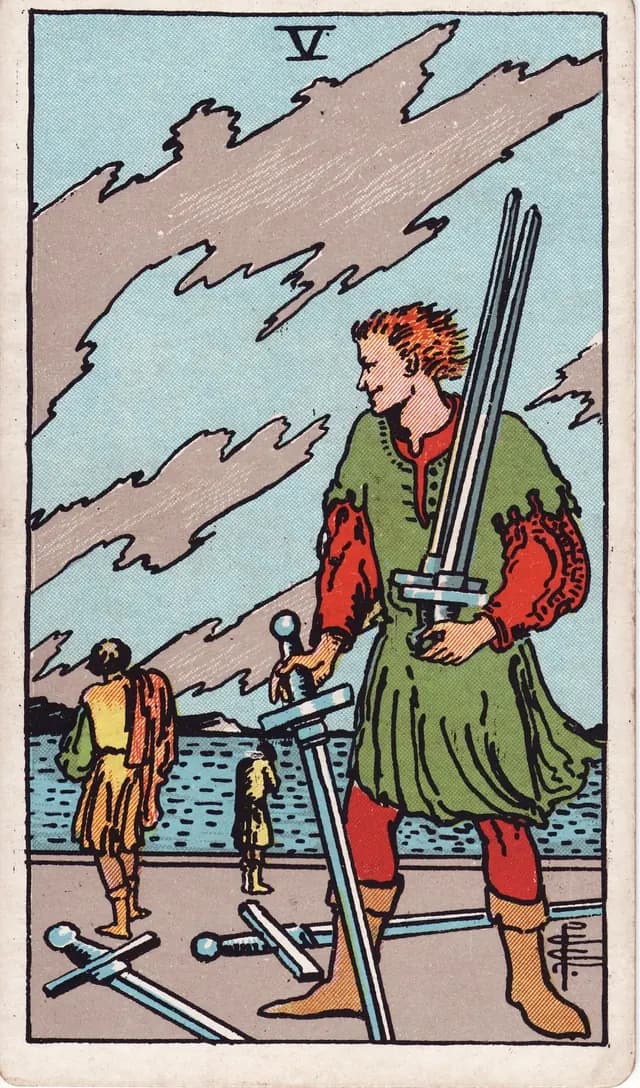
Upright, the Five of Swords receives No because the likely cost of the contest outweighs the win. Apply that answer to your proposed method as well as the outcome you hope to secure. The standing figure holds more swords while the others leave, making the loss of connection visible. A decision needs scrutiny when success depends on pressure, humiliation, or a damaged working relationship.
Reversed, the answer becomes Maybe as the conflict cools and a different approach becomes possible. That opening requires more than your wish for the disagreement to stop feeling uncomfortable. Look for a specific correction, fairer terms, and willingness to change the conduct that damaged trust. The practical condition is repair shown through actions, rather than assuming a quiet interval resolves the original problem.
Explore Five of Swords with your own draw
Your draw can reveal any card in the deck.
In love
An upright No asks you to reconsider an approach that treats a partner’s concession as the main prize. Name the underlying need and ask whether the conversation can address it without threats or scorekeeping. Reversed Maybe leaves room for an agreement when both people freely participate and the harmful pattern changes. Neither label requires staying in a conflict or promises that an apology will restore closeness.
At work
For a competitive work decision, upright No points toward the price paid in trust and cooperation. Review whether your preferred result depends on taking unfair credit or silencing a useful objection. Reversed Maybe can support reassessment when terms are clarified and responsibility for earlier conduct is addressed. A fair process remains the condition, even if the revised approach offers a less dramatic immediate win.
Your next step
List what your proposed victory would gain and what it could damage in the process. Include cooperation, credibility, and the ability to work together after the immediate dispute has ended. If those costs outweigh the benefit, change the method or decline the contest where possible. The Five gives the answer a practical test by asking what remains once the winning moment passes.
- costly no
- reversed maybe
- fair process
- repair needed
The image behind this reading
You can see a figure gripping three swords while two others turn away beside the water.[1]
Read these meanings as modern interpretations of the imagery in your 1909 Rider-Waite-Smith deck.