
What Four of Swords yes or no means
Upright: Maybe, because your next step needs room for quiet thought.
Reversed: Maybe, because your return needs a slow and steady pace.
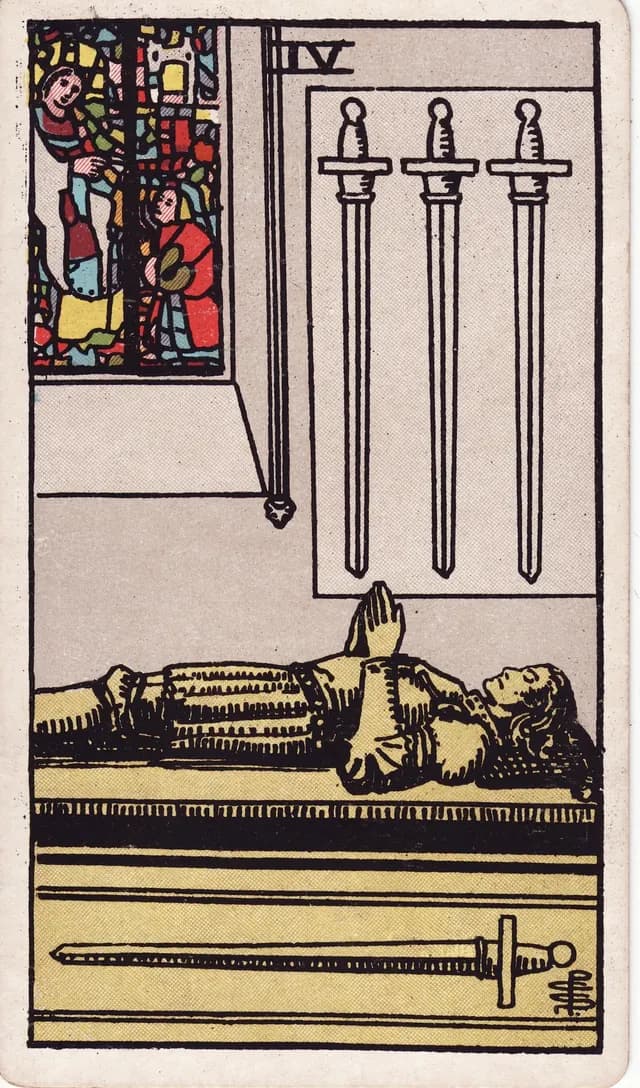
The Four of Swords receives Maybe upright because a quiet pause matters more than immediate action. For your question, the practical issue is whether enough space exists to think before committing. The resting figure suggests stepping outside repeated demands so the actual choice can receive attention. This classification leaves the answer open rather than treating delay as either approval or rejection.
Reversed, the card also receives Maybe, with attention shifting toward the pace of returning. The two labels match because the live map evaluates each orientation independently rather than automatically reversing answers. Ask whether your next step respects present capacity or simply reacts against the discomfort of waiting. A small trial can clarify that question without requiring the entire previous routine to resume.
Explore Four of Swords with your own draw
Your draw can reveal any card in the deck.
In love
For a relationship decision, upright Maybe points toward quiet reflection before answering an important request. Tell the other person when you can return to the topic so the pause remains understandable. Reversed Maybe asks whether renewed contact can happen at a pace both people freely accept. Neither orientation promises reunion, and a need for space still deserves a clear and respectful response.
At work
A work question can remain open while you review the proposal away from immediate meeting pressure. Use the upright Maybe to identify what a short pause would genuinely help you understand. The reversed Maybe shifts attention toward a limited restart instead of accepting every task at once. A workable schedule and a defined review point matter more than appearing instantly ready for everything.
Your next step
Choose a pause long enough to consider the question without repeatedly checking for a different answer. Write what you need to understand before agreeing, then set a realistic point to revisit it. If considering a return, define one small step and assess its demands before adding another. The Four makes Maybe practical through a clear rhythm of reflection, action, and review.
- upright maybe
- reversed maybe
- pause first
- measured return
The image behind this reading
You can see three hanging swords pointing downward above the figure’s joined hands and resting body.[1]
Read these meanings as modern interpretations of the imagery in your 1909 Rider-Waite-Smith deck.