
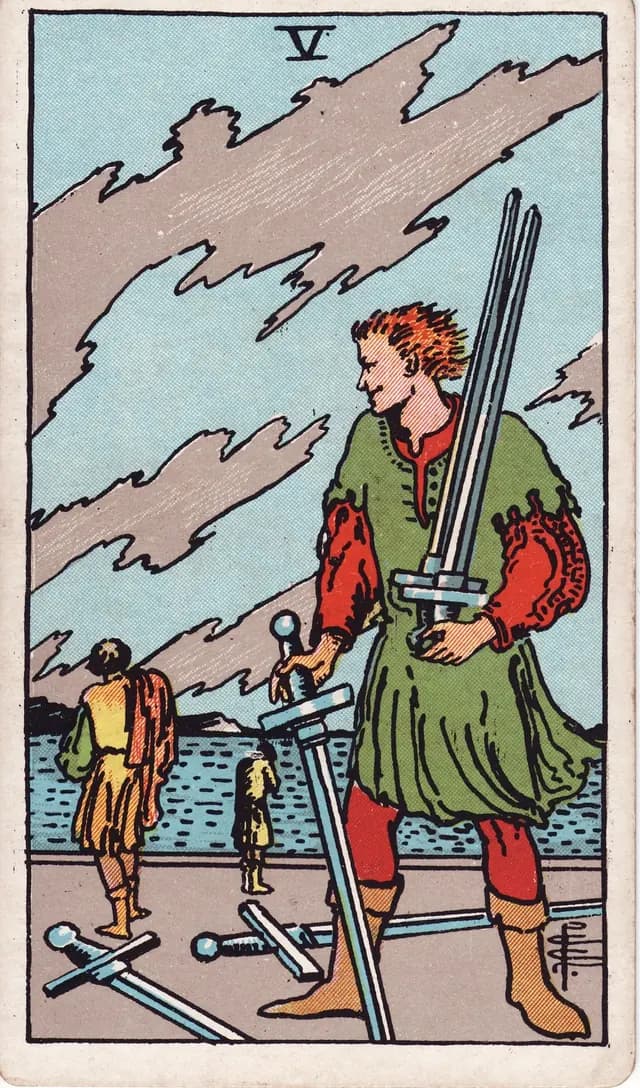
What Five of Swords as a person means
The Five of Swords as a person describes a pattern of treating disagreement as a contest. A person can become focused on the final word while overlooking the cost of obtaining it. If this reflects you, the growth area lies in choosing methods that preserve fairness and mutual respect. The card describes behavior that can change, without diagnosing anyone or fixing their character permanently.
This pattern can resemble someone who brings an old argument into an unrelated conversation to reclaim a win. Notice whether their accuracy serves the present issue or leaves you defending yourself against a repeated score. A single sharp exchange does not establish a lasting pattern, so consider conduct across relevant situations. The gathered swords highlight what was gained, while the departing figures ask what that gain displaced.
Explore Five of Swords with your own draw
Your draw can reveal any card in the deck.
In love
A partner who keeps score can make ordinary differences feel like evidence in a continuing case. State your concern about the pattern using one example rather than building a rival list of grievances. Ask for a discussion where both people can explain needs without being mocked or forced to concede. The Five supports clear limits around conduct, with change measured through the next real disagreement.
At work
At work, a competitive colleague can confuse defending an idea with diminishing whoever questions it. Keep your response tied to the proposal and ask for evidence that others can assess independently. A clear meeting process can help prevent the loudest reply from deciding the entire discussion. The Five describes a growth area in cooperation, with fair credit and respectful challenge providing practical alternatives.
Your next step
Notice one discussion where you want to correct the person more than resolve the actual question. Ask what useful outcome would remain if nobody received credit for having been right first. Offer a fair summary of their point before explaining the part you still disagree with. This practice helps the Five shift from collecting victories toward handling differences without unnecessary damage.
- competitive habits
- sharp replies
- costly pride
- fair disagreement
The image behind this reading
You notice the foreground figure’s sideways gaze toward the departing pair beneath the streaked clouds.[1]
Read these meanings as modern interpretations of the imagery in your 1909 Rider-Waite-Smith deck.