
What Five of Swords as feelings means
The Five of Swords as feelings suggests tension between wanting the upper hand and wanting connection. A moment of satisfaction can sit beside resentment when an argument has left someone feeling diminished. In your reading, the emotional question concerns what the victory cost rather than who spoke last. The image frames a possible pattern, without proving hostility or revealing another person’s private response.
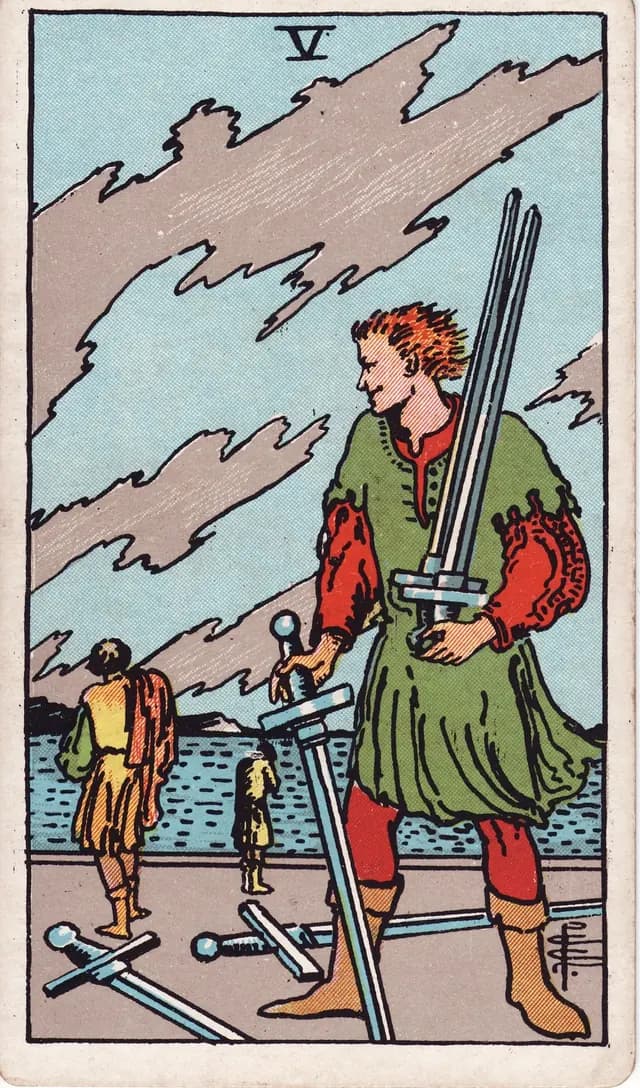
A cutting reply or repeated reference to winning can show how conflict is entering the conversation. Notice whether you feel heard after the exchange or merely pushed into accepting a position. Those effects matter without requiring a claim about what the other person secretly enjoys. The departing figures help focus attention on the distance that can follow an argument treated as competition.
Explore Five of Swords with your own draw
Your draw can reveal any card in the deck.
In love
A partner’s clever comeback can leave you feeling less close even when the factual point is accurate. Describe the effect of the delivery without turning the reply into another attempt to win. Ask whether both people can discuss the concern without sarcasm, scorekeeping, or public embarrassment. The Five directs attention toward the cost of conflict, with care shown through how disagreement is handled.
At work
After a competitive meeting, satisfaction about winning approval can mix with unease about how colleagues were treated. Ask whether your point needed the personal remark or public correction that accompanied it. Acknowledge the useful contribution someone made before the discussion became a contest over status. The Five names the emotional aftertaste of an empty win without assuming every workplace disagreement is personal.
Your next step
Notice the moment when your aim shifts from being understood to making the other person concede. Pause before sending the next reply and name the feeling that is driving that shift. Decide whether a direct request or a clear exit would address the concern more honestly. The Five becomes useful when it helps you recognize the emotional cost before another exchange adds to it.
How the Five of Swords Leaves Someone Feeling About You
The Five of Swords suggests a recent clash may still color the way this person pictures you. If an argument left them feeling beaten, they might now approach you with some caution. That wariness reflects the fight more than the full story of who you are. A calm repair talk, free of scorekeeping, can soften the image they keep of you.
- strained pride
- resentment
- empty victory
- wounded connection
The image behind this reading
You notice two fallen swords on the ground between the standing figure and the distant pair.[1]
Read these meanings as modern interpretations of the imagery in your 1909 Rider-Waite-Smith deck.