
What Five of Swords as intentions means
The Five of Swords as intentions can frame a plan focused on securing the upper hand. The growth area concerns whether winning has displaced the original purpose of the discussion or agreement. For your reading, examine the proposed action and its cost instead of declaring someone’s motives known. A competitive plan becomes a problem when its methods damage trust or disregard fair participation.
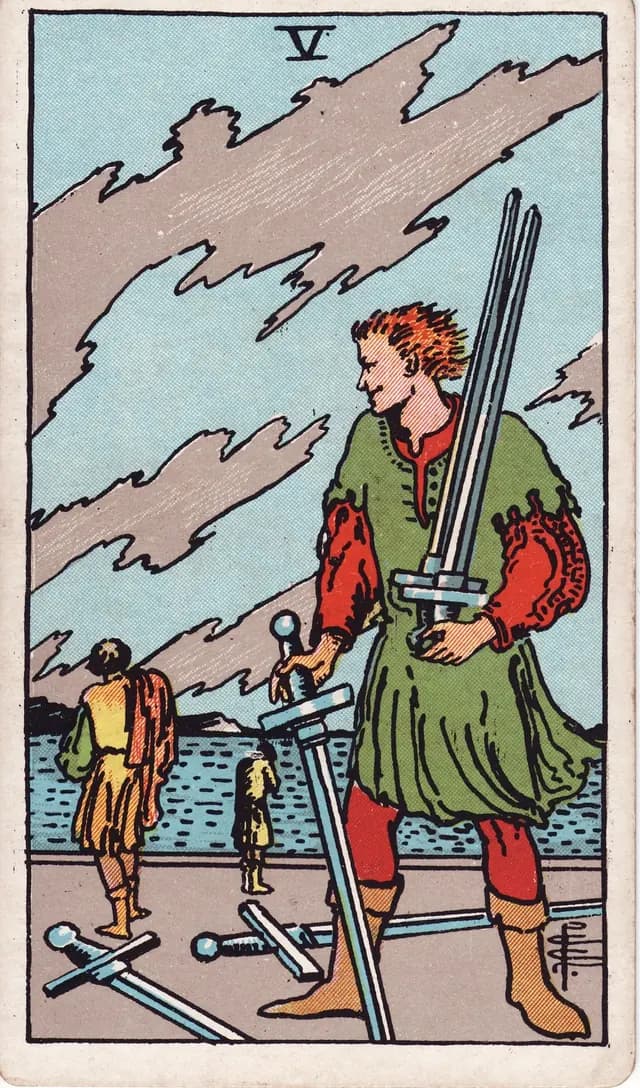
A person may propose terms that require you to concede everything while they offer little adjustment. Ask what shared problem the proposal solves and whose needs remain outside its stated purpose. Those details provide evidence about the agreement itself, even when the private intention remains uncertain. The collected swords offer an image for possession after a contest, with the departing people showing its cost.
Explore Five of Swords with your own draw
Your draw can reveal any card in the deck.
In love
An intention to win a relationship argument can appear through demands for an apology without mutual listening. Ask whether the proposed conversation gives you room to explain your concern and name a boundary. A plan that requires humiliation or constant concession does not create a workable basis for closeness. The Five invites scrutiny of the terms without claiming the card has uncovered a secret plot.
At work
A competitive proposal can promise a quick win while placing the cost on colleagues who lack a voice. Review how your plan assigns credit, responsibility, and any burden created by its preferred outcome. Ask for the affected people’s input before treating their silence as agreement with the approach. The Five warns through the visible cost of the contest, keeping fair process central to the decision.
Your next step
Write the outcome you want and the method you currently plan to use to obtain it. Ask which parts would still feel fair if another person used the same method toward you. Remove the tactic that depends on embarrassment or pressure, then restate the request in clear terms. The Five becomes practical when the plan can succeed without turning cooperation into a contest over status.
- competitive plan
- costly victory
- pressure tactics
- fair terms
The image behind this reading
You see the foreground figure holding gathered swords while looking toward the people near the water.[1]
Read these meanings as modern interpretations of the imagery in your 1909 Rider-Waite-Smith deck.