
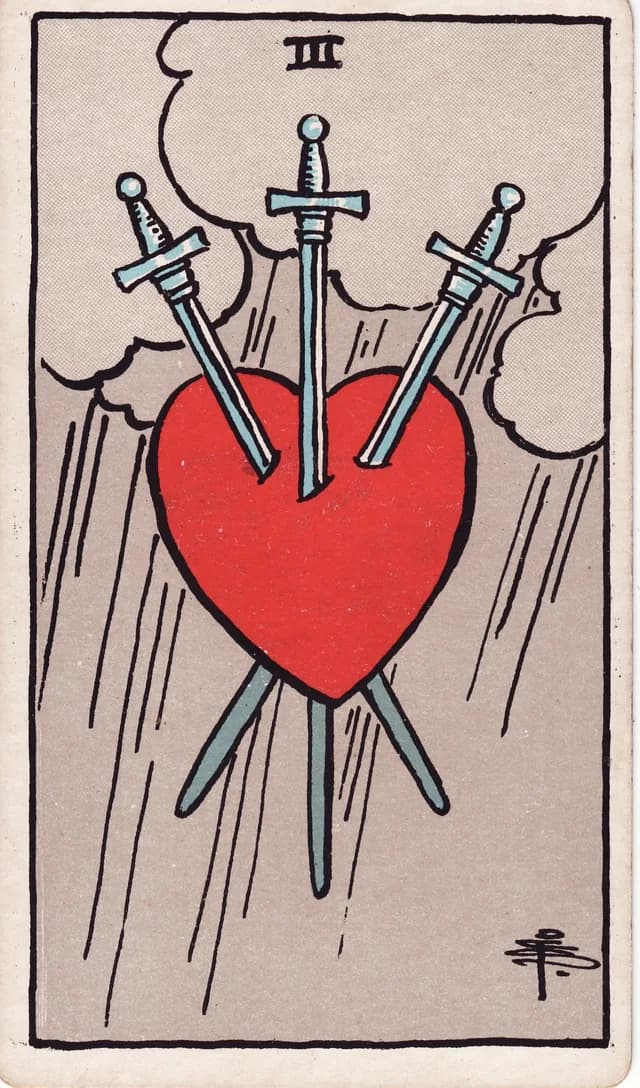
What Three of Swords as a person means
The Three of Swords as a person describes behavior shaped by a present disappointment or painful truth. A person can seem tender, direct about hurt, or less ready for familiar conversation. If this reflects you, the reading makes room for that response without making sadness an identity. The heart is an image for an experience, rather than a diagnosis or fixed character type.
A friend who names a recent disappointment may need listening before suggestions about moving forward. Notice whether you can hear the specific event without deciding it explains everything about them. Their current pain does not reveal how they will behave in every future relationship. The Three asks for attention to the actual feeling while preserving a fuller view of the person.
Explore Three of Swords with your own draw
Your draw can reveal any card in the deck.
In love
Someone carrying disappointment can need clearer reassurance about the agreement between you and them. Offer only what you can honestly sustain, rather than making large promises to remove their sadness. Their hurt deserves care, and your boundaries deserve equal recognition within the relationship too. The Three supports honest contact without assigning either person the role of fixing every old wound.
At work
A colleague affected by rejection may speak less or feel more exposed during a review. Ask what specific feedback would help their work instead of interpreting the response as lasting weakness. If this describes you, request an example and a clear next step before judging your ability. The card describes a difficult experience that should not become the whole professional story.
Your next step
Describe what you are going through using an event and feeling, rather than a permanent label. Name one activity or connection that still matters outside the disappointment occupying your attention. Ask for the kind of support you need, including listening without immediate advice when appropriate. The Three leaves room for pain while keeping your choices and wider life in view.
- emotional honesty
- tender boundaries
- pain acknowledged
- careful openness
The image behind this reading
You notice the heart alone in the rain, with no human figure shown around it.[1]
Read these meanings as modern interpretations of the imagery in your 1909 Rider-Waite-Smith deck.