
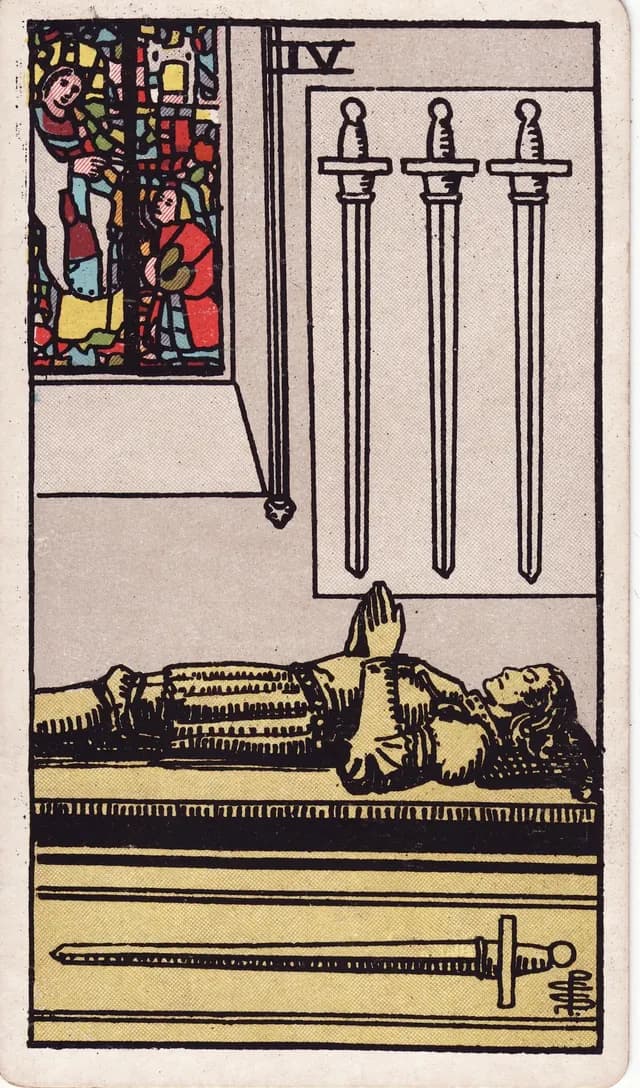
What Four of Swords as a person means
The Four of Swords as a person describes someone who values space before responding. Their strength can appear through measured answers and a willingness to step outside constant discussion. If this pattern fits you, quiet becomes useful when it supports a clearer return to the issue. The card describes a habit people can develop, rather than a permanent label about sociability.
A reflective friend may ask to think overnight before answering a question that matters. Notice whether the later response shows attention to what you actually asked them about. Silence alone does not establish wisdom, just as a quick answer does not establish carelessness. The resting figure points toward purposeful withdrawal, with its value shown through the response that follows.
Explore Four of Swords with your own draw
Your draw can reveal any card in the deck.
In love
A partner who needs quiet can still participate fully in a close and honest relationship. Explain your need for time while making clear that important conversations will receive a response. Invite an agreement about contact that gives both people enough space without leaving either person guessing. The Four works through communicated limits, allowing reflection to support the bond rather than replace engagement.
At work
This person can bring a considered view after others have exhausted themselves debating the immediate options. Give this quiet colleague your brief and time to review it before asking for a recommendation. Their quiet approach becomes useful when deadlines and responsibilities remain visible throughout the process. A thoughtful worker still needs to communicate progress, especially when a team is waiting to proceed.
Your next step
Practice a measured response by telling someone when you can answer their nonurgent question. Use the interval to consider the issue itself rather than rehearse how to avoid it. Return at the agreed point with an answer or a precise explanation of what remains unresolved. The Four turns a preference for quiet into a reliable habit others can understand.
- reflective habits
- quiet boundaries
- measured response
- deliberate rest
The image behind this reading
You notice the colored window above the resting figure, beside the vertical blades on the wall.[1]
Read these meanings as modern interpretations of the imagery in your 1909 Rider-Waite-Smith deck.