
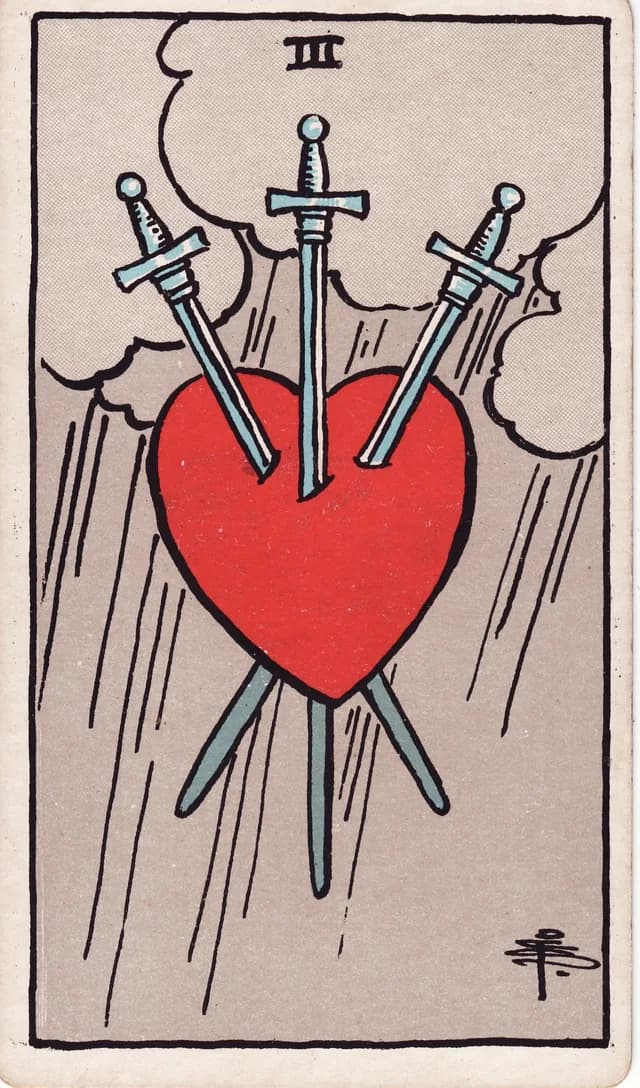
What Three of Swords as intentions means
The Three of Swords as intentions can frame a plan to acknowledge something painful. That could mean naming disappointment, setting a difficult boundary, or discussing a truth previously avoided. For your reading, separate the possible purpose of a conversation from what anyone has actually promised. The card cannot establish an intention to hurt or confirm that a separation is coming.
A person who requests a serious conversation may want the unresolved issue heard clearly. Ask what topic they want to discuss instead of preparing for a conclusion they never stated. Look for willingness to be specific and to hear your account of the event. A plan becomes observable through the conversation itself, including how limits and consequences are handled.
Explore Three of Swords with your own draw
Your draw can reveal any card in the deck.
In love
An intention to speak about disappointment needs room for you to answer without immediate pressure. Agree on the topic and choose a setting where both people can pause if needed. A painful conversation can clarify a boundary without requiring either reconciliation or separation as its result. The Three points toward truth that needs care, leaving the relationship decision with those involved.
At work
At work, this intention can resemble preparing to discuss rejection or a promise that fell through. Gather the relevant message or agreed expectation so your concern stays connected to an actual event. Explain the effect and the response you are requesting, rather than guessing why it happened. The card supports naming disappointment clearly enough that the next conversation has a useful purpose.
Your next step
Before arranging a difficult talk, write what you want the other person to understand. Separate that purpose from any wish to make them feel the same pain you felt. Choose one request that relates directly to the event, such as clarification or a changed boundary. The Three becomes constructive when honest expression has a purpose beyond replaying the original hurt.
- difficult honesty
- naming hurt
- painful conversation
- clear limits
The image behind this reading
You can follow the central sword through the heart while two other blades enter at angles.[1]
Read these meanings as modern interpretations of the imagery in your 1909 Rider-Waite-Smith deck.