
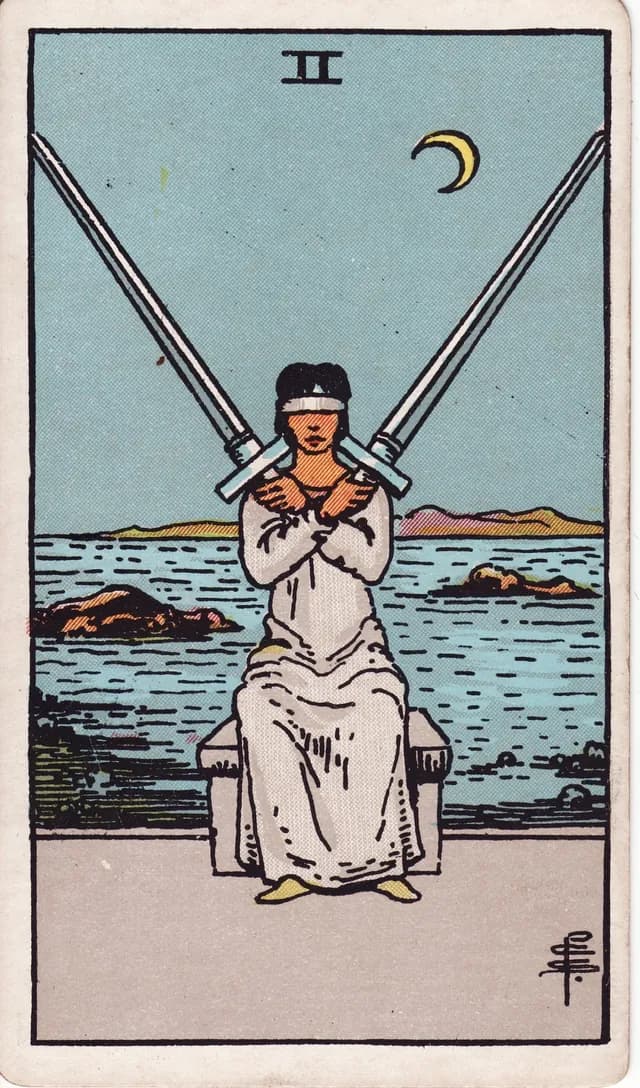
What Two of Swords as a person means
The Two of Swords as a person describes a pattern of weighing opposing positions cautiously. That care can help you avoid reacting before both sides have received a fair hearing. The growth area appears when protecting balance becomes a reason to leave every decision unfinished. Read the card as changeable behavior, with no fixed judgment about intelligence or personal worth.
This pattern can resemble a friend who understands both accounts but struggles to state a preference. Their listening may help you feel heard, while their missing answer keeps practical matters unresolved. Notice whether they can move from acknowledging complexity to naming what they will actually do. The blindfold reminds you that remaining neutral can also hide information that needs attention.
Explore Two of Swords with your own draw
Your draw can reveal any card in the deck.
In love
A cautious partner may try to preserve peace by keeping difficult preferences to themselves. Invite a clear answer to one manageable question instead of demanding complete certainty about the future. Make room for your own boundaries if their hesitation leaves the relationship permanently undefined. The Two works better when fairness includes honest choice, rather than silence that protects appearances.
At work
At work, this person can identify the competing interests that others rush past during debate. Ask them to turn that balanced view into a recommendation with its tradeoffs clearly stated. A decision deadline helps your team benefit from their care without losing momentum to repeated review. Their strength becomes useful when examining both sides eventually supports a practical course of action.
Your next step
Notice one moment when you describe both sides but avoid stating your own preference. Say which option fits the current need better, acknowledging the cost that comes with choosing. Start with a small decision where the consequences are manageable and the answer can be revised. Practice helps the Two retain careful thought while loosening the habit of remaining forever undecided.
- careful weighing
- guarded response
- conflict avoidance
- held balance
The image behind this reading
You notice the folded arms supporting crossed blades while the figure sits squarely on a bench.[1]
Read these meanings as modern interpretations of the imagery in your 1909 Rider-Waite-Smith deck.