
What Seven of Swords yes or no means
Upright: No, because your plan leaves key facts out of view.
Reversed: Maybe, because your next agreement needs the missing truth first.
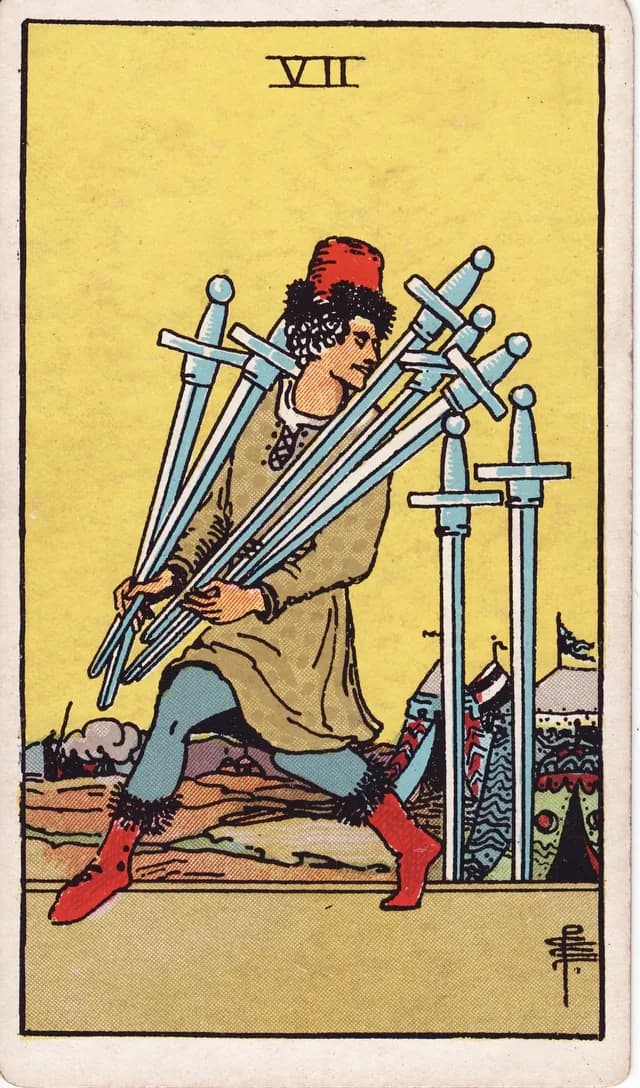
Upright, the Seven of Swords receives No because concealed details weaken the basis for the proposed action. Apply the answer to your method and the information available, rather than declaring another person guilty. The departing figure offers a modern image for a selective account that benefits from remaining incomplete. Before agreeing, identify what the proposal leaves unsaid and whether that omission changes the choice.
Reversed, the classification is Maybe because a fuller account can make a different decision possible. The condition is honesty about the missing fact and responsibility for any consequences already created. Ask whether everyone affected now understands the same arrangement before renewing your consent or support. A correction opens discussion, but it does not guarantee acceptance or erase the effect of earlier concealment.
Explore Seven of Swords with your own draw
Your draw can reveal any card in the deck.
In love
For a relationship question, upright No asks you to examine the agreement beneath an appealing promise. Clarify what is offered and whether an omitted detail would change your willingness to participate. Reversed Maybe leaves room to reconsider after an honest account, with no requirement to forgive or reconnect. Neither answer confirms cheating or hidden affection, which cannot be established through a symbolic classification.
At work
An upright No suits a proposal that depends on withholding information from someone responsible for the decision. Ask for the full terms before lending your work or approval to an incomplete account. Reversed Maybe can support a fresh review once the omission is corrected and the process becomes transparent. The practical condition is an honest shared understanding, including who accepts the work and consequences involved.
Your next step
Choose the unanswered question most likely to change your decision if its answer differs from the pitch. Request a direct response and avoid committing while that material point remains deliberately outside the discussion. If the omission was yours, correct it with the people whose choices relied on the earlier account. The Seven turns its answer into a useful check on information rather than a verdict about someone’s character.
- incomplete facts
- upright no
- reversed maybe
- honest conditions
The image behind this reading
You can see the colorful tents behind the figure and two blades standing apart on the right.[1]
Read these meanings as modern interpretations of the imagery in your 1909 Rider-Waite-Smith deck.