
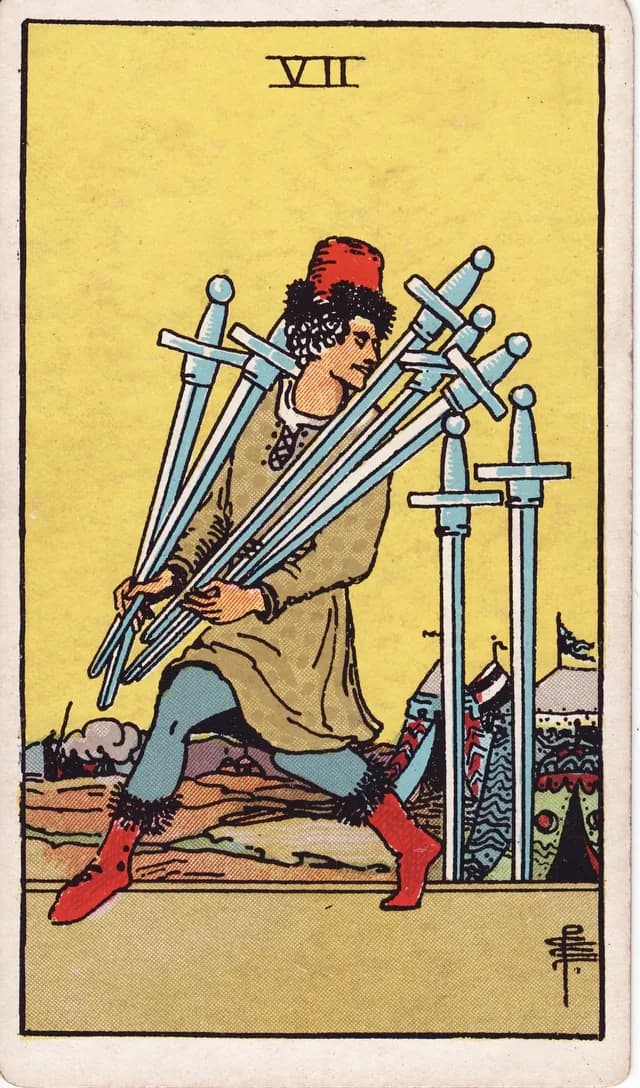
What Seven of Swords as intentions means
The Seven of Swords as intentions suggests a possible plan whose important details have not been shared. A clever shortcut can appear efficient while shifting an unseen cost onto someone outside the discussion. For your reading, examine the method and conditions before deciding whether the proposed outcome deserves support. The card cannot reveal a secret plot, so the assessment must rest on the plan actually offered.
A proposal may explain the benefit clearly but avoid naming who gives permission or carries responsibility. Ask for those missing terms before allowing your name or work to become part of the arrangement. The figure takes five swords while leaving two, offering an image of a selectively presented account. What remains outside the pitch can matter as much as the appealing part being carried forward.
Explore Seven of Swords with your own draw
Your draw can reveal any card in the deck.
In love
A person may propose private contact while avoiding a clear conversation about what that arrangement means. Ask whether the plan respects your stated boundaries and any existing agreements it would affect. Privacy can be mutually chosen, but pressure to conceal relevant facts deserves a direct question. The Seven examines the proposed conduct, without claiming that the card has established an intention to deceive.
At work
Bypassing a review can sound efficient while removing the person responsible for checking an important risk. Ask what the review protects and whether your alternative supplies an equally clear way to address it. A shortcut needs permission and accountability, not merely confidence that nobody will notice the missing step. The Seven questions the method behind the win, with honest process central to any workable revision.
Your next step
Write the proposed action as someone affected by it would understand the full sequence. Include the permission, information, and responsibility your preferred version leaves outside the conversation right now. Ask whether the plan still makes sense when those details are visible to everyone involved. The Seven becomes useful when a clever method can withstand an honest explanation of how it works.
- partial plan
- private strategy
- questioned shortcut
- shared facts
The image behind this reading
You see the five carried swords angled across the figure’s chest above the red boots.[1]
Read these meanings as modern interpretations of the imagery in your 1909 Rider-Waite-Smith deck.