
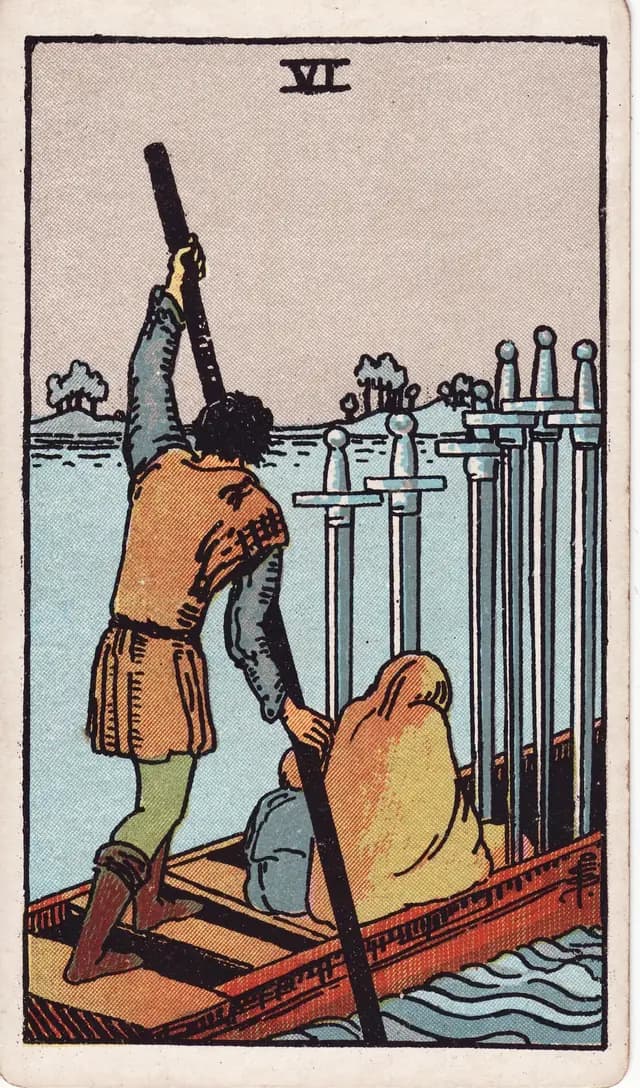
What Six of Swords as intentions means
The Six of Swords as intentions suggests a possible plan to leave a difficult pattern behind. That plan can involve a move, a handover, or a quieter way of handling continued contact. For your reading, the useful distinction is between wanting relief and arranging the passage that makes change practical. The standing guide offers an image for directed effort, while actual arrangements provide evidence of intent.
Someone may say they want a fresh start while leaving the next step entirely undefined. Ask which condition they intend to change and how the proposed action will affect your agreement. A named date and an accepted responsibility make the plan easier to assess without guessing motives. Until those details become actions, the Six describes a possible direction rather than proof of an eventual departure.
Explore Six of Swords with your own draw
Your draw can reveal any card in the deck.
In love
An intention to move beyond arguments needs more detail than a promise to stop mentioning the past. Agree on how you will raise a concern without restarting the exchange both people want to leave. If the plan involves distance, clarify contact and shared responsibilities before assuming the arrangement means reconciliation. The Six favors an understandable passage, with neither person asked to rely on an unspoken destination.
At work
A proposed job move becomes concrete through an accepted role, a handover schedule, and confirmed responsibilities. Ask which part of your current work will continue and who will receive the unfinished material. A plan that names only the departure can leave avoidable confusion for everyone remaining behind. The Six emphasizes the crossing itself, so assess how the transition works alongside the appeal of the destination.
Your next step
Write the action that would make your wish for calmer conditions visible to someone else. Include what changes first, who needs to know, and what must be settled before that change. Check whether the plan depends on another person agreeing to something they have not offered. The Six becomes practical when the passage has clear responsibilities and room to respond to real circumstances.
- planned transition
- quiet departure
- shared passage
- clear handover
The image behind this reading
You can follow the long pole from the standing figure’s raised hand down beside the boat.[1]
Read these meanings as modern interpretations of the imagery in your 1909 Rider-Waite-Smith deck.