
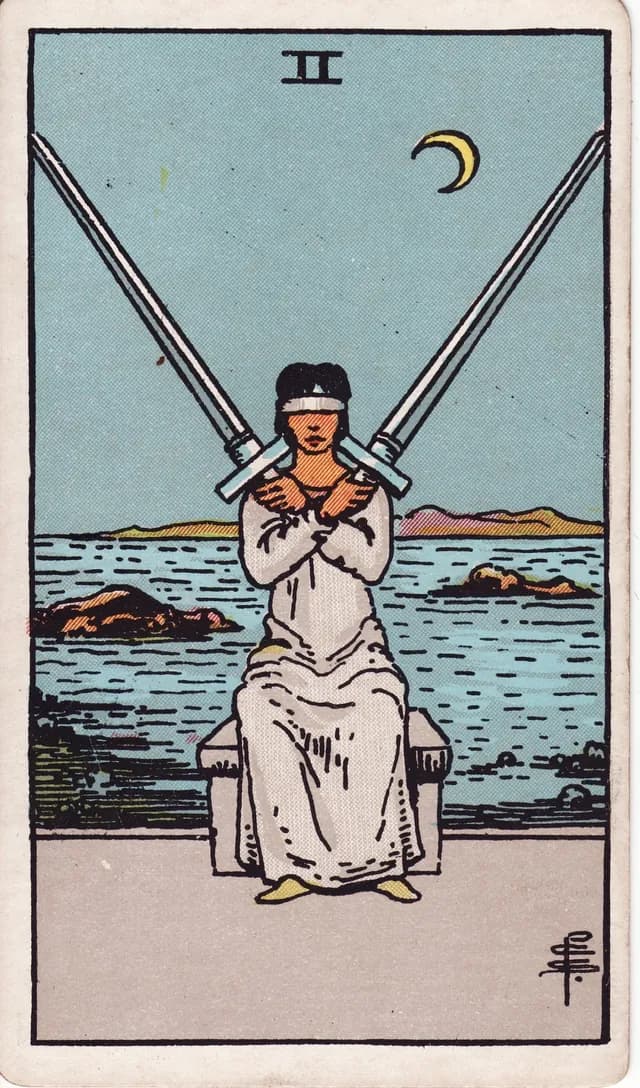
What Two of Swords as intentions means
The Two of Swords as intentions points toward a possible plan to delay commitment. Keeping both options open can feel safer than accepting the cost of choosing either one. For your reading, distinguish a stated need for time from evidence that a decision is progressing. The card frames that question without revealing a private plan someone has never shared.
An intention to think becomes concrete when the person names what they still need to learn. A vague promise to decide later leaves you with no way to assess the pause. Ask what information is missing and when the question can reasonably return for discussion. The crossed blades describe a held position, with movement depending on an actual decision process.
Explore Two of Swords with your own draw
Your draw can reveal any card in the deck.
In love
Someone may intend to preserve the current connection while avoiding a more defined relationship. Clarify what the present arrangement means for you before agreeing to wait without a boundary. A request for time deserves an honest discussion of contact, expectations, and the next conversation. The Two supports naming the unresolved choice without treating delay as a concealed commitment.
At work
A team can plan another review when the real obstacle is an unspoken disagreement about priorities. Ask which tradeoff your next meeting is meant to resolve and who can decide it. A useful pause has a question, an owner, and an agreed point for returning. Without those elements, repeated comparison can leave your team waiting while both options stay suspended.
Your next step
Turn your intention to think into a short plan with a clear stopping point. Identify one fact that could change the choice and one preference only you can name. Set aside a specific time to review both, then tell affected people when to expect an answer. This gives the Two a practical exit from waiting for complete emotional certainty.
- delayed decision
- held position
- weighing options
- unclear commitment
The image behind this reading
You see the seated figure balancing two long blades beneath a small crescent moon.[1]
Read these meanings as modern interpretations of the imagery in your 1909 Rider-Waite-Smith deck.