
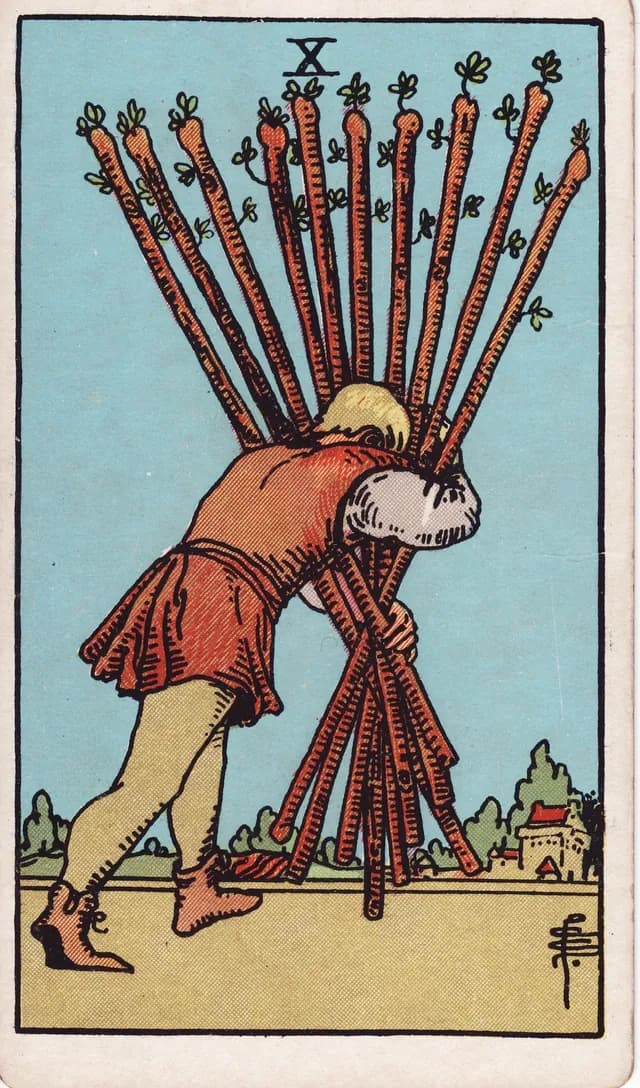
What Ten of Wands yes or no means
Upright: Leaning no, because your load already needs fewer demands.
Reversed: Maybe, because sharing your load leaves the next step open.
The Ten of Wands upright receives Leaning no in Naksham's current map because the load is already heavy. Its bent figure makes your available capacity central to the question of accepting more. Count the work already promised before deciding whether the new request has a realistic place. The practical condition is reducing or sharing existing duties, rather than assuming stronger effort can absorb every addition.
Reversed, the current answer is Maybe because releasing responsibilities can leave the next step open. Confirm which task has actually been handed over and what space that gives you. A promise of help does not create capacity until the arrangement begins working in practice. An existing burden and a possible reduction call for different questions about the next commitment.
Explore Ten of Wands with your own draw
Your draw can reveal any card in the deck.
In love
For love, upright Leaning no asks whether another promise would deepen an already uneven workload. Discuss your share of planning and repair before agreeing to manage another shared responsibility. Reversed Maybe leaves room to reconsider after the duties have been redistributed in practice. Neither answer establishes a partner's feelings, and both depend on the arrangement the people involved willingly choose.
At work
At work, upright Leaning no fits adding another task to a schedule that already exceeds capacity. Bring your current commitments to the person assigning work and request a clear priority decision. Reversed Maybe asks whether a completed handoff has made the proposed addition genuinely manageable. Review the available hours, keeping the decision tied to evidence instead of a wish to appear capable.
Your next step
Ask whether to accept one named duty with a defined deadline and a clear scope. List your existing commitments beside it so the cost of saying yes becomes visible. Use upright Leaning no to consider declining or requesting a smaller version of the task. With reversed Maybe, confirm the workload reduction before treating the newly available time as already free to spend.
- upright leaning no
- reversed maybe
- capacity check
- lighter workload
The image behind this reading
Look beyond the carried bundle as you locate the small red roof near the right edge.[1]
Read these meanings as modern interpretations of the imagery in your 1909 Rider-Waite-Smith deck.