
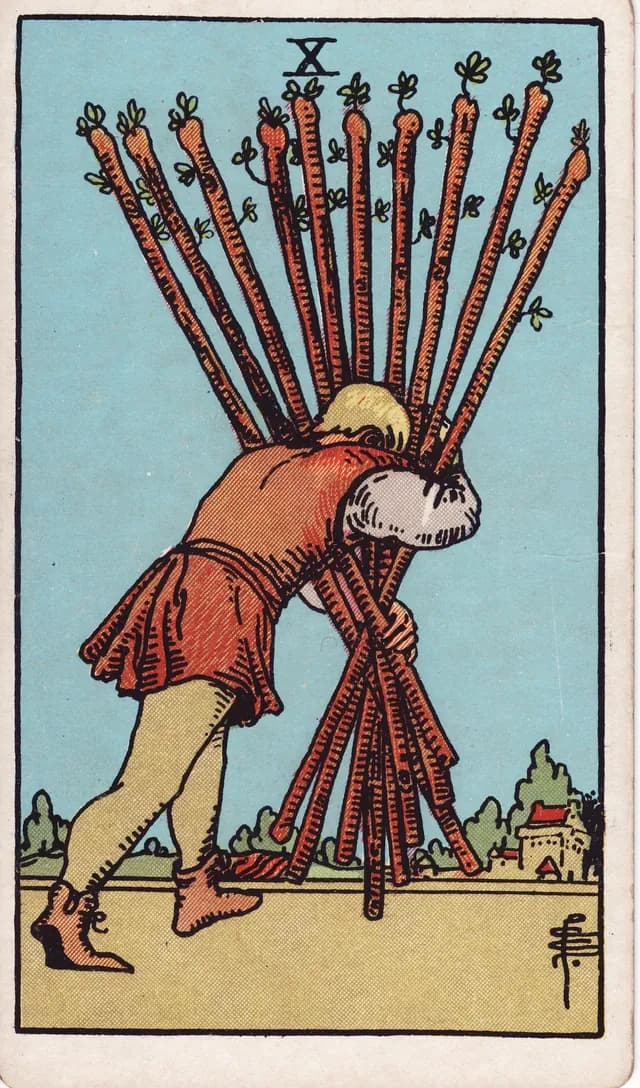
What Ten of Wands as a person means
The Ten of Wands as a person describes someone who repeatedly becomes responsible for too much. Reliability draws more requests, and the person keeps accepting them even as the load grows. Notice where your own helpfulness has become an expectation that no longer needs to be discussed. This pattern can change through clearer roles, shared ownership, and permission to decline another duty.
A friend organizes every gathering, remembers everyone's preferences, and stays behind to finish the cleanup. Their contribution makes the event possible, but your group rarely notices the full work involved. Name that effort and arrange shared tasks before the next invitation creates the same pattern. Appreciation becomes more useful when it changes who carries the planning as well as the final chores.
Explore Ten of Wands with your own draw
Your draw can reveal any card in the deck.
In love
As a partner, this pattern shows care through practical effort that can gradually become excessive. Notice whether your shared routines depend on one person anticipating every need and solving every problem. Discuss ownership before another favor turns into a duty that nobody remembers agreeing upon. Reliability remains a strength when both people can contribute, ask for help, and leave some requests unanswered.
At work
At work, a Ten pattern often becomes the dependable person who absorbs unfinished tasks from others. Make their existing workload visible before asking whether they can cover your additional request. Assign backup and document ownership so the team does not depend on permanent overextension. Their useful skills deserve a workable role, rather than becoming the reason every difficult handoff ends with them.
Your next step
Review the last three extra duties you accepted and write down why each seemed necessary. Separate work that matches your role from tasks accepted mainly to avoid disappointing someone. Practice one clear refusal that names your existing commitment without offering a long defense. Share a full responsibility with another person, allowing them to complete it through their own workable approach.
- reliable helper
- overloaded role
- borrowed duties
- shared responsibility
The image behind this reading
You can see the rear heel lifted above the ground behind the figure's forward step.[1]
Read these meanings as modern interpretations of the imagery in your 1909 Rider-Waite-Smith deck.