
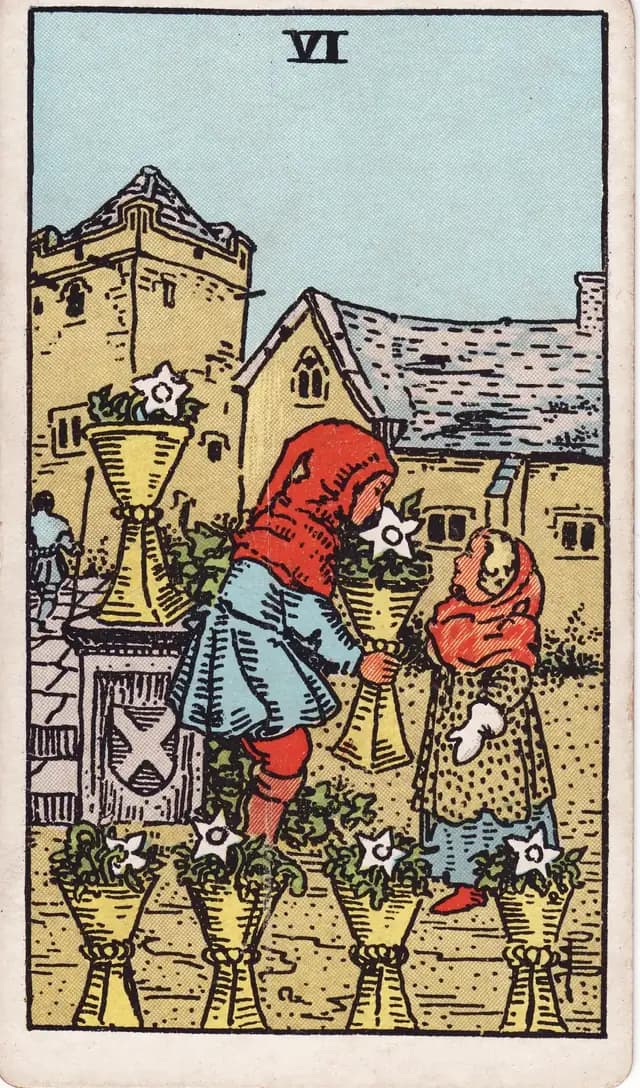
What Six of Cups yes or no means
Upright: Leaning yes, because familiar kindness gives your choice a base.
Reversed: Leaning no, because your past is crowding this present choice.
The Six of Cups upright receives Leaning yes in Naksham's current map, favoring familiar kindness and reconnection. Apply the answer to an invitation whose warmth is supported by a present willingness to participate. Check whether your shared history helps the current choice or merely makes its unanswered questions feel less noticeable. The offered flowers suggest a generous exchange, with current details still needed before agreement becomes clear.
Reversed, the answer is Leaning no because attachment to the past can crowd a present decision. Ask whether your proposed return fits today's needs or depends on everyone becoming who they were before. A practical condition is comparing the remembered arrangement with the one actually available to choose now. These independent classifications distinguish useful familiarity from attachment, without treating every old connection as either welcome or limiting.
Explore Six of Cups with your own draw
Your draw can reveal any card in the deck.
In love
For love, upright Leaning yes supports considering a kind invitation when both people freely welcome current contact. Ask what your reunion would mean instead of letting remembered tenderness settle an important relationship question. Reversed Leaning no highlights comparison with an earlier bond that prevents the present person from being seen clearly. Let today's words and behavior determine the decision, even when a shared past makes the invitation especially moving.
At work
At work, upright Leaning yes fits exploring a former contact or skill with clear usefulness for today's brief. Check the role, expectations, and available time before agreeing because your earlier collaboration felt friendly. Reversed Leaning no asks whether loyalty to an old method is preventing a more suitable response. Present fit matters, so a familiar approach deserves the same practical review as an unfamiliar proposal.
Your next step
Write one reason from the past and one reason from the present for accepting the invitation. Check that your current reason can stand without assuming the earlier experience will happen again. Use upright Leaning yes to explore kindness that still has a workable place in today's circumstances. With reversed Leaning no, name the outdated expectation before considering a return on revised terms.
- upright leaning yes
- reversed leaning no
- current fit
- kind reconnection
The image behind this reading
Notice the four foreground cups as you follow their white flowers across the lower edge of the image.[1]
Read these meanings as modern interpretations of the imagery in your 1909 Rider-Waite-Smith deck.