
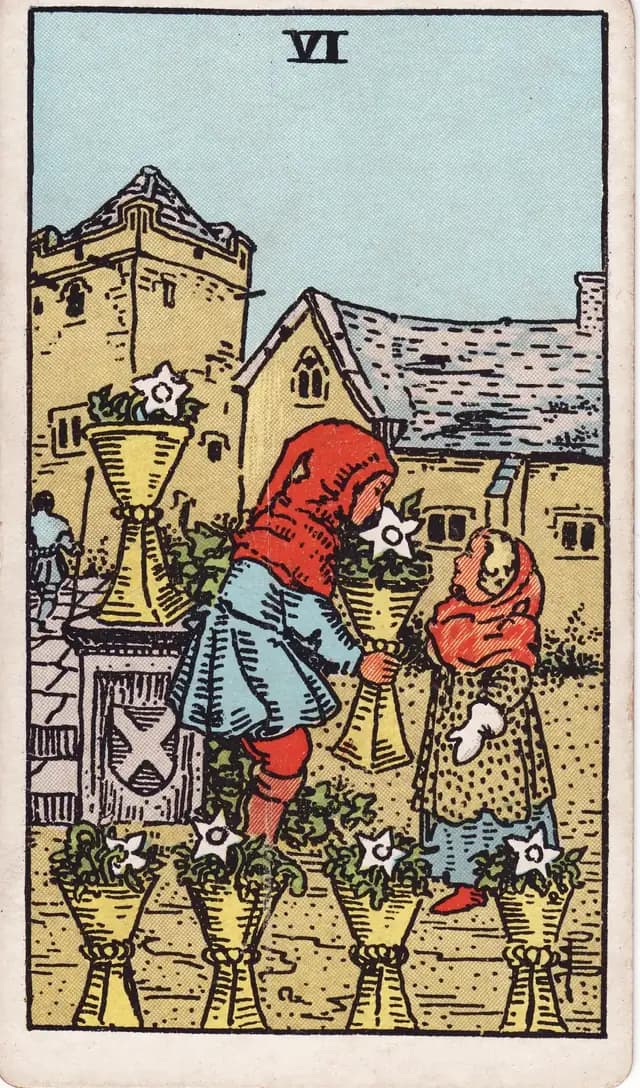
What Six of Cups as a person means
The Six of Cups as a person describes someone who expresses care through remembered details and simple generosity. They keep a familiar tradition alive, recall an old preference, or make newcomers feel gently included. Notice how your own kindness uses memory without assuming another person's tastes can never change. This way of relating can develop through experience without fixing someone's level of innocence or maturity.
A friend brings a familiar game to a gathering because it once helped everyone feel at ease. Before setting it out, they ask whether you would still enjoy playing with the group tonight. That question lets the old pleasure become a current choice instead of an obligation to preserve tradition. The Six's person pattern is strongest when thoughtful memory works alongside curiosity about who is present now.
Explore Six of Cups with your own draw
Your draw can reveal any card in the deck.
In love
As a partner, this pattern notices anniversaries, remembers small preferences, and enjoys rituals that carry shared meaning. Tell the person which gestures still feel personal to you and which tastes have changed over time. Return the same attention without requiring every expression of affection to refer to an earlier moment. The Six brings history into love while leaving space for new forms of closeness to develop.
At work
At work, this person often remembers how beginners felt and offers help without making the lesson intimidating. Invite them to explain a familiar process while checking whether your current tools require any different steps. Recognize their kindness without expecting them to perform the same unpaid helping role in every project. The Six's generous style contributes best when remembered experience supports learning and the helper's present responsibilities remain respected.
Your next step
Practice one small act of remembering, such as asking about an interest someone mentioned during an earlier conversation. Listen to the current answer instead of immediately repeating the story you already know about them. Offer a familiar kindness only after checking whether it still suits the moment and your available time. Thoughtful memory leaves room for a different answer, so kindness can respond to the person present today.
- thoughtful giver
- warm memory
- simple generosity
- familiar rituals
The image behind this reading
You can see the smaller figure's white mitten beside the offered cup and patterned yellow clothing.[1]
Read these meanings as modern interpretations of the imagery in your 1909 Rider-Waite-Smith deck.