
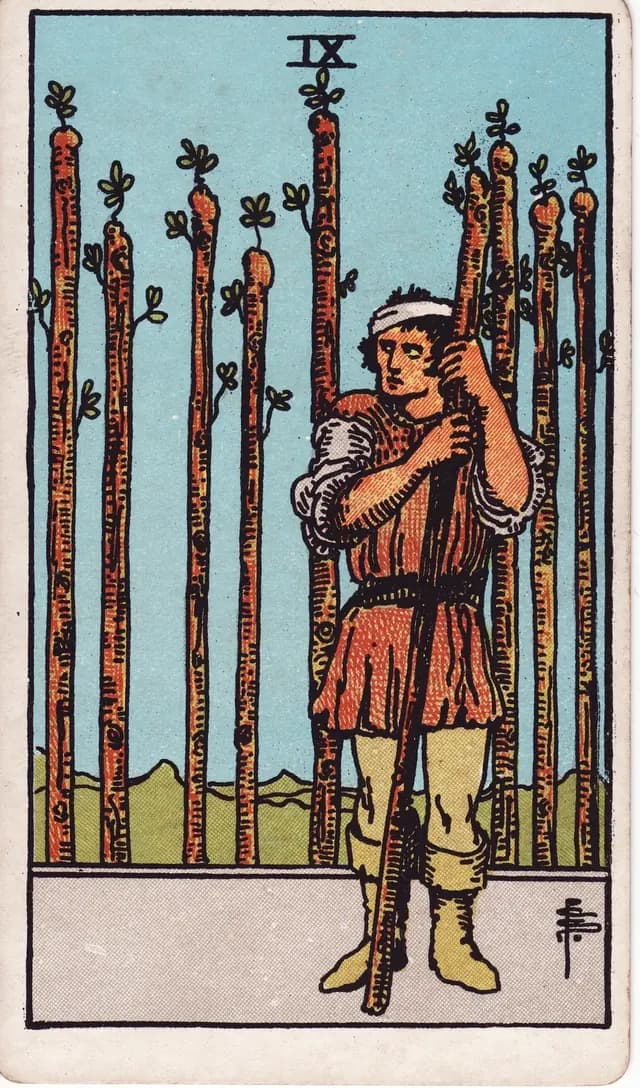
What Nine of Wands as a person means
The Nine of Wands as a person describes someone who remains involved after difficult setbacks. This pattern brings memory of what went wrong and care for what still needs protecting. Notice where your own experience helps others prepare without assuming every new situation will repeat the past. The trait describes practiced persistence, which can develop alongside greater ease, shared responsibility, and rest.
A group member remembers an earlier problem and checks the agreement before everyone starts again. Their attention catches a missing detail that your team would otherwise have overlooked together. Thank them for the check while asking which concerns need action in this particular situation. Experience becomes useful when it guides preparation instead of making every new attempt feel like another battle.
Explore Nine of Wands with your own draw
Your draw can reveal any card in the deck.
In love
As a partner, this pattern can bring steady involvement during a relationship's more demanding periods. Notice whether care for your bond includes listening and repair as well as staying present. A person who rarely leaves can still need practice with openness, softness, and shared decisions. Appreciate their consistency without making constant struggle the measure of how much either partner cares.
At work
At work, a Nine pattern remembers past setbacks and prepares the team for known difficulties. Ask them to document the checks that matter so useful knowledge does not stay with one person. Give your colleague a defined responsibility and a real handoff when their work ends. Their staying power serves the team better when the role includes support instead of permanent emergency cover.
Your next step
Choose one lesson from a difficult experience and turn it into a clear practical check. Share that check with someone else so you do not remain its only keeper. Notice which present situations differ from the past before deciding the same defense is needed. Practicing a specific boundary and a planned break lets steadiness include flexibility instead of constant readiness for trouble.
- tested steadiness
- watchful helper
- strong boundaries
- learned caution
The image behind this reading
You can see the orange tunic beneath the bent arms and above the pale trousers.[1]
Read these meanings as modern interpretations of the imagery in your 1909 Rider-Waite-Smith deck.