
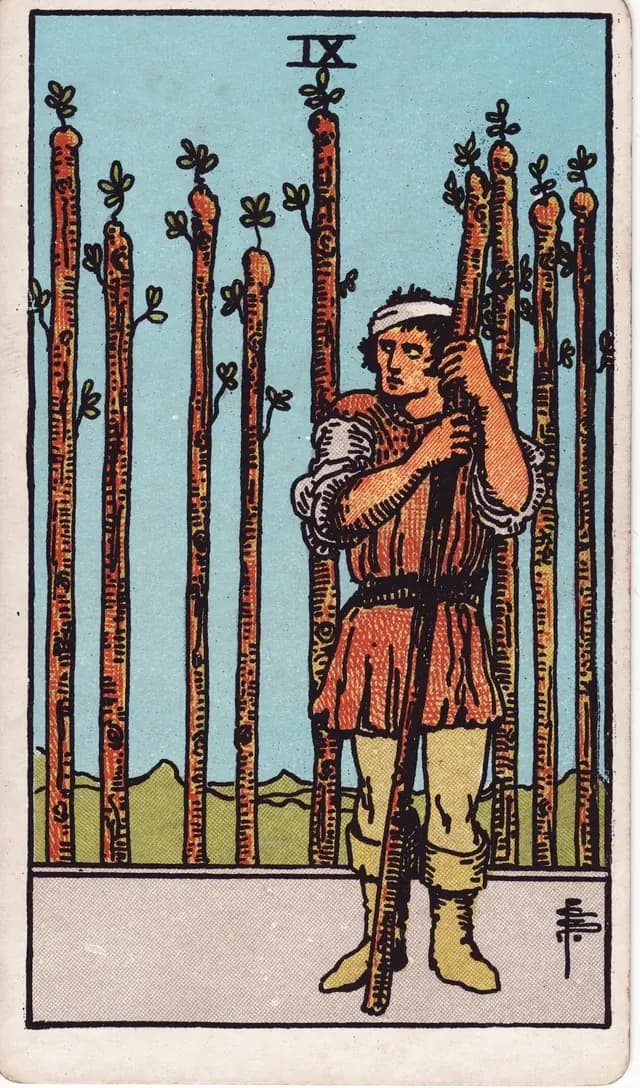
What Nine of Wands reversed means
The Nine of Wands reversed suggests that keeping your guard raised has become tiring. Earlier setbacks still shape the response, even when the present situation needs a different approach. Notice whether every request feels like another test that must be met without help. A planned pause lets you review the actual demand before spending more energy defending against it.
An unfinished project keeps drawing attention because leaving it briefly feels like losing ground. Check which parts genuinely need your presence and which can wait through a clear break. Ask someone to cover one defined task instead of monitoring every detail from a distance. The reversal makes room for recovery without requiring a decision about abandoning the whole effort.
Explore Nine of Wands with your own draw
Your draw can reveal any card in the deck.
In love
In love, the reversed Nine highlights guarded contact that leaves little room for ease. A small disagreement starts to carry the weight of several older arguments for you. Separate the current request from those earlier experiences before deciding what answer feels right. Ask for a calmer time to talk, while keeping any boundary that remains necessary now.
At work
At work, repeated setbacks can turn ordinary review into another exhausting round of defense. Bring your actual task list to the discussion and identify what needs immediate attention. Request cover for a specific responsibility so the break does not become more hidden work. Returning with a clear scope makes it easier to tell useful persistence from automatic overextension.
Your next step
Choose one period when you can stop checking the issue that keeps demanding attention. Tell anyone affected what will wait and who can handle a genuinely urgent request. Put the phone or notebook aside so the pause includes freedom from repeated monitoring. Afterwards, decide which boundary still serves its purpose and which response can become less guarded.
- lowered guard
- needed rest
- worn defenses
- shared watch
The image behind this reading
Notice the white head bandage as you look at the figure gripping a single staff.[1]
Read these meanings as modern interpretations of the imagery in your 1909 Rider-Waite-Smith deck.