
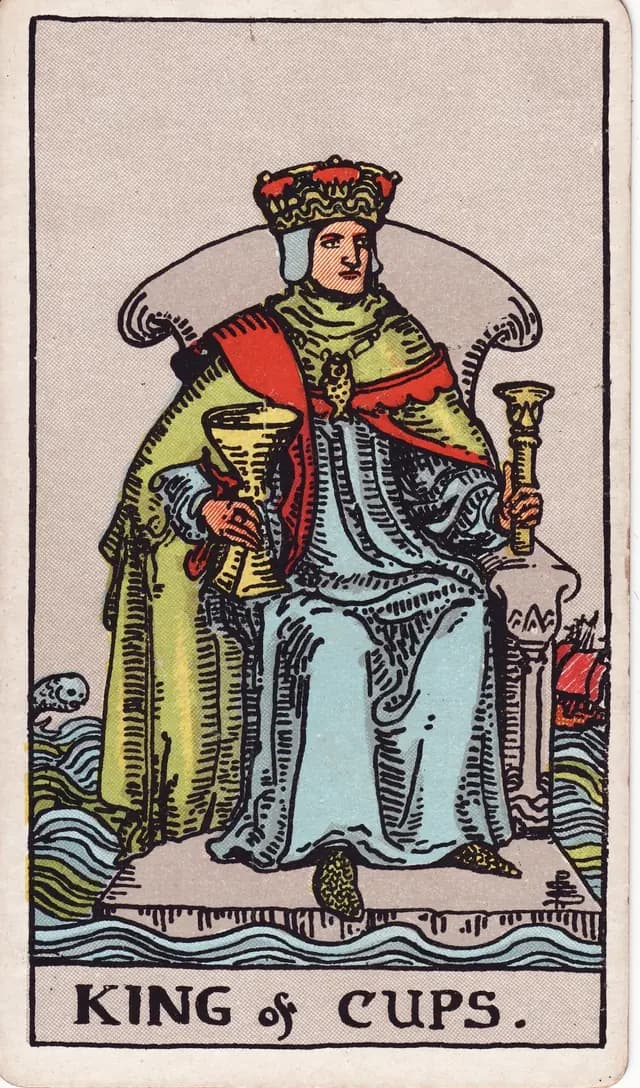
What King of Cups yes or no means
Upright: Leaning yes, because your calm response leaves room for real care.
Reversed: Maybe, because your quiet surface leaves key feelings unspoken.
The King of Cups upright receives Leaning yes in Naksham's current map, favoring a warm and considered response. Apply the answer to a choice you can make while acknowledging feelings without reacting impulsively to them. Check that the proposal's terms remain clear even when someone expresses a different preference. The throne amid water frames emotional balance, while agreement makes a favorable approach dependable as a shared decision.
Reversed, the answer stays Maybe because a calm surface can leave important feelings and concerns unspoken. Ask what your next step depends on knowing before treating a composed reply as a complete explanation. A useful condition is naming the unresolved issue and allowing an honest answer to affect the proposed arrangement. These orientations compare expressed balance with concealed tension without revealing motives or deciding a conversation's eventual outcome.
Explore King of Cups with your own draw
Your draw can reveal any card in the deck.
In love
For love, upright Leaning yes supports a step whose warmth includes room for honest disagreement and separate needs. Ask whether you can discuss the practical terms without requiring either person to hide an uncomfortable feeling. Reversed Maybe asks what has remained unsaid beneath an apparently smooth exchange about the relationship. Discuss that concern before treating a calm manner as evidence that both people want the same commitment.
At work
At work, upright Leaning yes favors responding to pressure with clear information and consideration for the people involved. Name your concern without turning the meeting into a judgment about anyone's whole ability or character. Reversed Maybe highlights a decision influenced by stress that has not been acknowledged within the team. Ask for missing context before relying on a confident presentation to settle the practical question under discussion.
Your next step
Write the decision beside the feeling it brings up and keep both visible while considering your response. Ask what evidence supports the proposal and which concern still needs a direct answer from someone involved. Use upright Leaning yes to examine a choice made with warmth, clear terms, and room for differing views. With reversed Maybe, name what remains hidden before allowing a calm presentation to close the question too quickly.
- upright leaning yes
- reversed maybe
- expressed balance
- unspoken concern
The image behind this reading
Notice the red sailing ship beside the throne as you look across the waves on the right.[1]
Read these meanings as modern interpretations of the imagery in your 1909 Rider-Waite-Smith deck.