
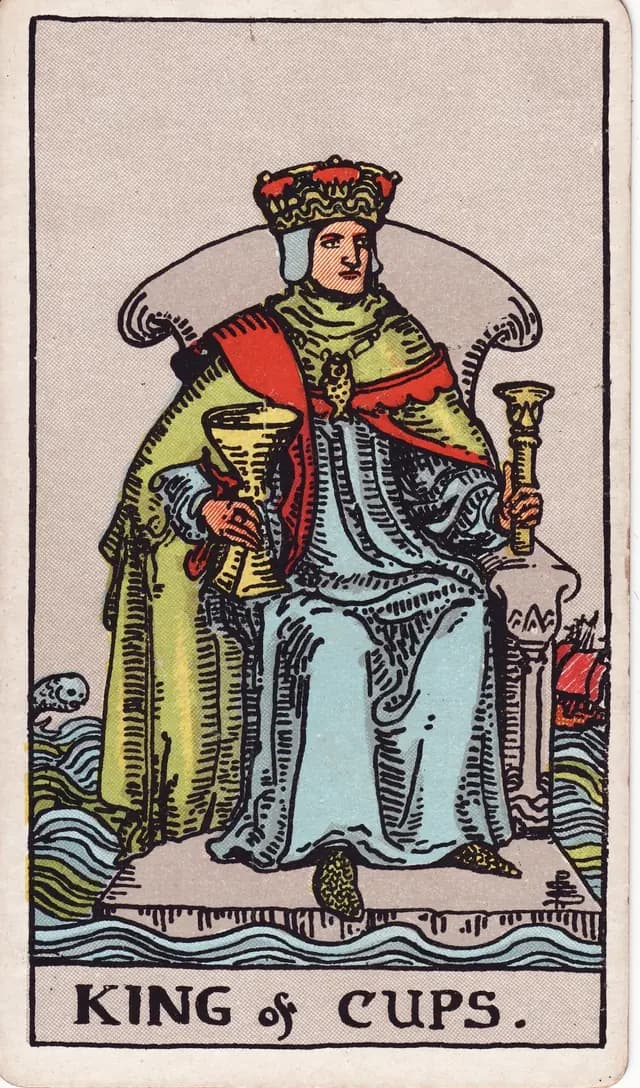
What King of Cups as a person means
The King of Cups as a person describes someone who recognizes strong feelings and chooses a considered response. They can name a concern without making everyone else responsible for matching or removing its intensity. Notice whether your steadiness leaves room for another person's account instead of claiming the calmest voice must win. Practice can develop this behavior without making a court title proof of maturity, authority, or fixed emotional nature.
A friend feels disappointed when plans change but explains the problem without turning it into a personal accusation. They ask what happened and tell you which arrangement would work better if the issue appears again. Observe whether the same fairness remains when the answer is inconvenient or challenges their first interpretation. A warm response keeps the feeling and the practical question equally available for honest discussion.
Explore King of Cups with your own draw
Your draw can reveal any card in the deck.
In love
As a partner, this pattern offers care that can remain present through an uncomfortable or disappointing exchange. Explain your needs clearly and notice whether the person's response allows an honest difference without withdrawing all affection. Invite them to share their own feelings rather than assigning them the permanent role of the steady one. Both people can be affected by a difficult exchange while remaining responsible for how they choose to respond.
At work
At work, this person can clarify a tense discussion so the group can choose its next action. Ask them to name the practical issue and invite your quieter colleagues to contribute information about it. Keep responsibility shared so a steady manner does not make one person the automatic owner of every conflict. Emotional balance adds value when it helps the team act fairly beyond making the room feel calmer.
Your next step
Practice naming one strong feeling without turning it into a claim about another person's whole character. Explain the event and your request, then listen for information that could change how you understand the situation. Take a defined pause when needed and return to the question at the time you agreed. Warmth and honest expression work together through these choices, especially during the difficult part of an exchange.
- warm steadiness
- considered leader
- emotional honesty
- fair dialogue
The image behind this reading
You can see the fish pendant hanging below the green collar at the center of the king's chest.[1]
Read these meanings as modern interpretations of the imagery in your 1909 Rider-Waite-Smith deck.