
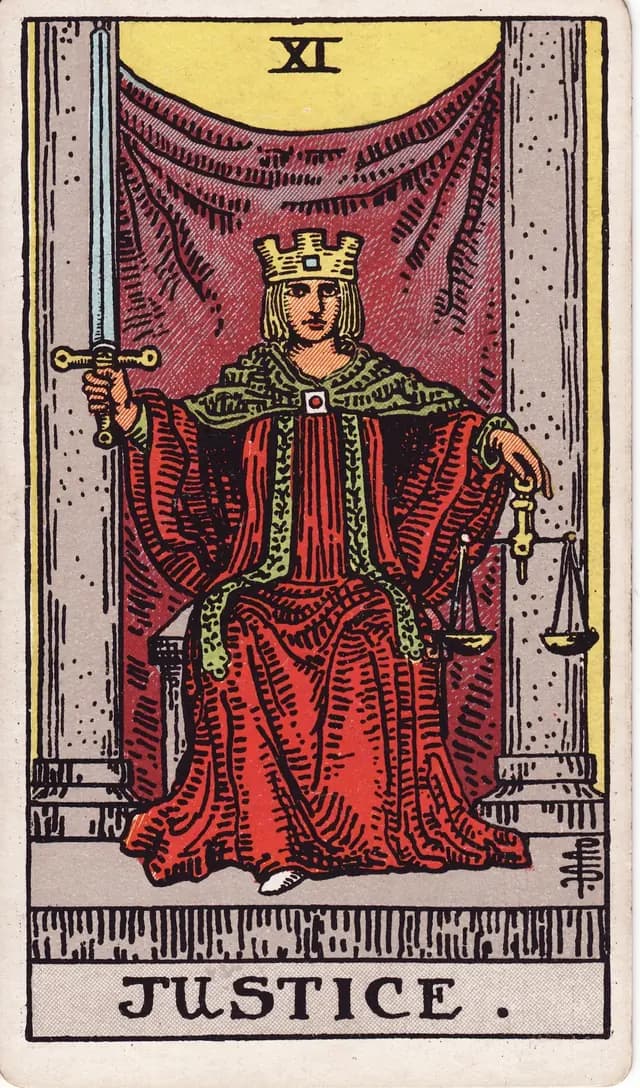
What Justice as intentions means
Justice as intentions suggests a possible plan to clarify an agreement or take responsibility for a choice. The proposed direction centers on fairness, with both people able to understand what they are accepting. Ask which term the person wants to settle and how your own concerns will be heard. A careful explanation suggests a plan, while only a completed correction shows that responsibility was actually taken.
Imagine someone offering to revisit a shared schedule after learning that its demands fall unevenly on you. Their proposal becomes concrete when they bring available times and ask which duties can reasonably move. Agree on the revised arrangement and review whether it works after an ordinary week of use. The evidence lies in that follow-through, rather than in how convincingly the person describes themselves as fair.
Explore Justice with your own draw
Your draw can reveal any card in the deck.
In love
In love, this card suggests an intention to discuss expectations openly or repair an earlier uneven arrangement. Ask what the person proposes to change and explain what a workable agreement would mean for you. A wish to make things right can be meaningful without already resolving the effect of earlier choices. Let responsibility become visible through specific actions before treating the conversation as proof that trust is restored.
At work
At work, Justice points toward a plan to define ownership, credit, or the standards used to assess contributions. Ask for the proposed terms in a form you and your colleagues can review together. Check whether the same criteria apply to everyone doing comparable work under the same agreed conditions. A fair intention becomes useful when the process makes decisions understandable and gives corrections a clear place.
Your next step
Request the specific change behind a promise to be fair, including who will carry it out. Explain the result you need without making agreement depend on the other person admitting every interpretation you hold. Set a review point where both people can compare the revised terms with what actually happened. Justice's intention is best assessed through an understandable agreement and visible responsibility for keeping it.
- fair proposal
- clear terms
- chosen responsibility
- practical repair
The image behind this reading
The two stone pillars frame the seated figure as you look past the crown toward the curtain.[1]
Read these meanings as modern interpretations of the imagery in your 1909 Rider-Waite-Smith deck.