
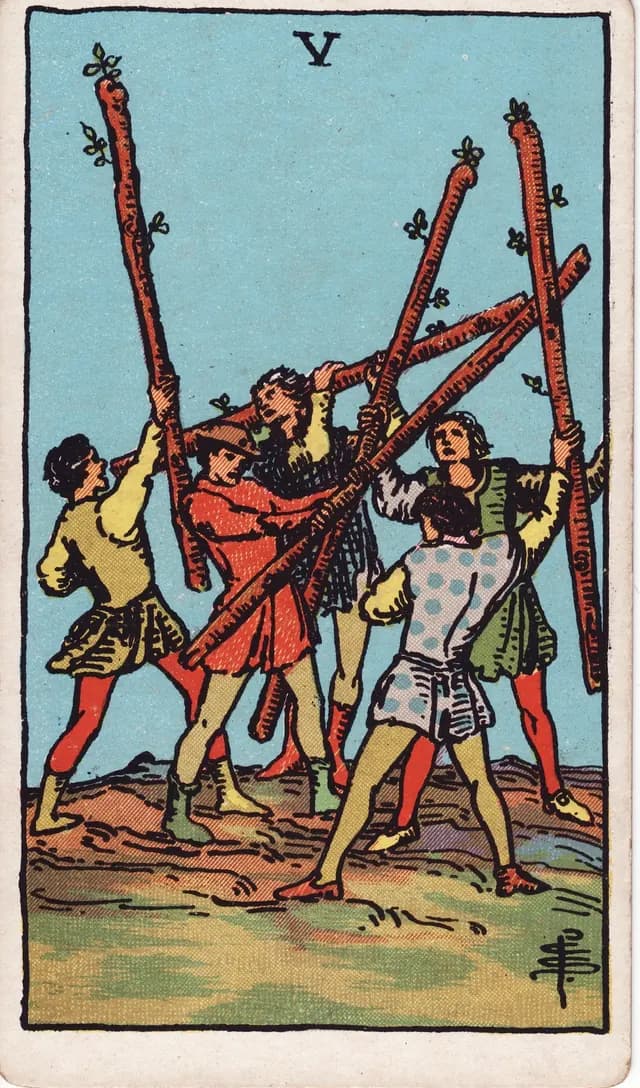
What Five of Wands as intentions means
The Five of Wands as intentions suggests a possible plan to challenge, compete, or argue for a preference. The person could be preparing to test an idea rather than accept the existing arrangement. Ask what they want changed and how their proposed action would affect your role. The card frames competing aims, leaving the person's stated plan and follow-through to establish their intention.
A colleague brings an alternative proposal and asks the group to compare it with the current approach. Request the same criteria for both ideas before your meeting becomes a contest of confidence. Notice whether the proposer accepts a fair review or keeps changing the terms when challenged. That response helps distinguish an intention to improve the work from behavior focused only on winning the exchange.
Explore Five of Wands with your own draw
Your draw can reveal any card in the deck.
In love
In love, the possible intention is to press a need or question a shared decision. Ask your companion what outcome they want instead of reading disagreement as a plan to leave. A clear request can be discussed, while repeated provocation offers little basis for a shared next step. State the conditions for a useful conversation and watch whether their actions respect those limits.
At work
At work, this card suggests a plan to compete for attention, resources, or support for an idea. Ask the person to explain their proposal and how its success would be judged fairly. Clarify your responsibilities before joining a contest whose rules or shared purpose remain vague. Compare the proposals through agreed criteria so each contributor knows how the final decision will be made.
Your next step
Ask the person challenging the plan to name the change they want and the reason behind it. State your own goal so the discussion can compare real needs rather than defend vague positions. Agree on a fair way to test the options before either side claims a win. Observe whether the agreed process is followed, keeping conclusions about intention close to the actions actually taken.
- competing plans
- direct challenge
- fair contest
- tested proposal
The image behind this reading
Follow the lifted staff at the left as you notice the figure leaning outward beneath it.[1]
Read these meanings as modern interpretations of the imagery in your 1909 Rider-Waite-Smith deck.