
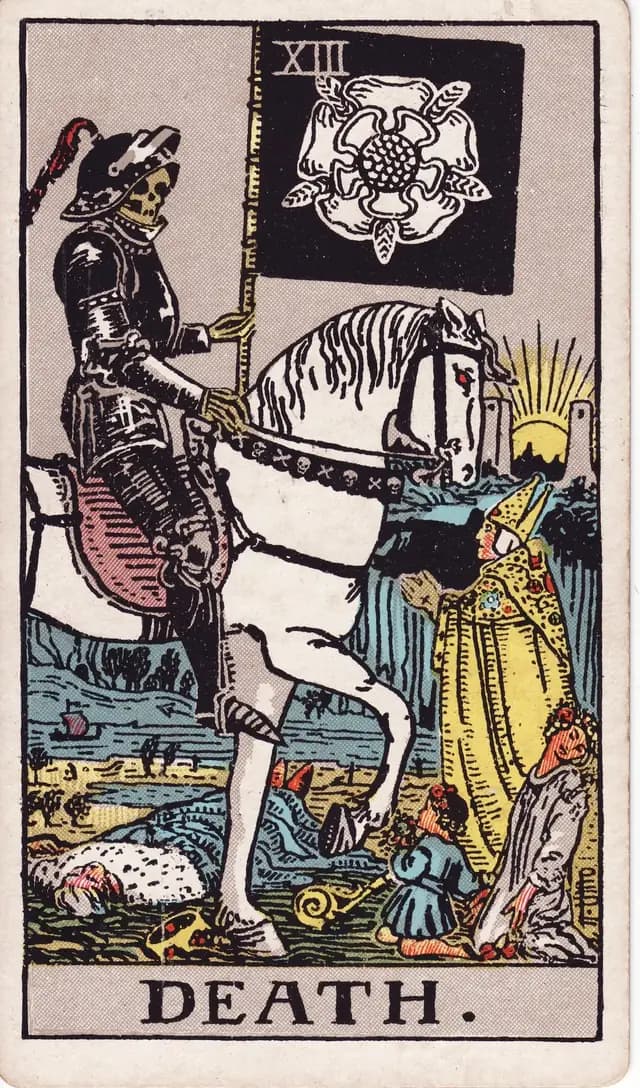
What Death as a person means
Death as a person describes someone willing to let a chapter close when it no longer fits. This pattern appears through retiring old roles, ending unhelpful habits, and allowing identity to change with experience. Notice where your willingness to release the familiar creates space for a more honest present choice. The card describes a practiced behavior without defining anyone as destructive or destined to leave every connection.
Picture a friend ending their role as organizer because the activity belongs to an earlier phase of life. They explain the change, finish the last agreed session, and help the group find a different arrangement. Notice how that closure respects your shared history without asking the old role to remain available forever. Their change becomes understandable because the ending is communicated and the remaining responsibility is handled with care.
Explore Death with your own draw
Your draw can reveal any card in the deck.
In love
As a partner, this pattern can acknowledge when an old way of relating needs to end. Discuss which expectations you both want to release and which commitments still feel freely chosen in the present. A person comfortable with change should still listen to the effect their decisions have on the relationship. The strength is honestly revising the terms, without treating every difficult moment as a reason to disappear.
At work
At work, this pattern appears in people who can close an outdated process instead of defending it forever. Ask them to identify what still serves your team before deciding which part of the method should stop. Give the transition a clear handover so useful knowledge survives when the old routine comes to an end. Their strength becomes practical when change includes completion and communication, not only a preference for starting again.
Your next step
Choose one role you still describe as part of yourself even though its daily reality has changed. Write what remains meaningful and which duties you no longer need to perform to honor that history. Communicate a modest change to anyone affected and complete the responsibility that makes the ending clear. This practices Death's ability to release an old form without demanding a completely new identity overnight.
- honest endings
- changing identity
- clear closure
- released habits
The image behind this reading
The white horse steps forward as you notice the lifted front hoof above the figures below.[1]
Read these meanings as modern interpretations of the imagery in your 1909 Rider-Waite-Smith deck.