
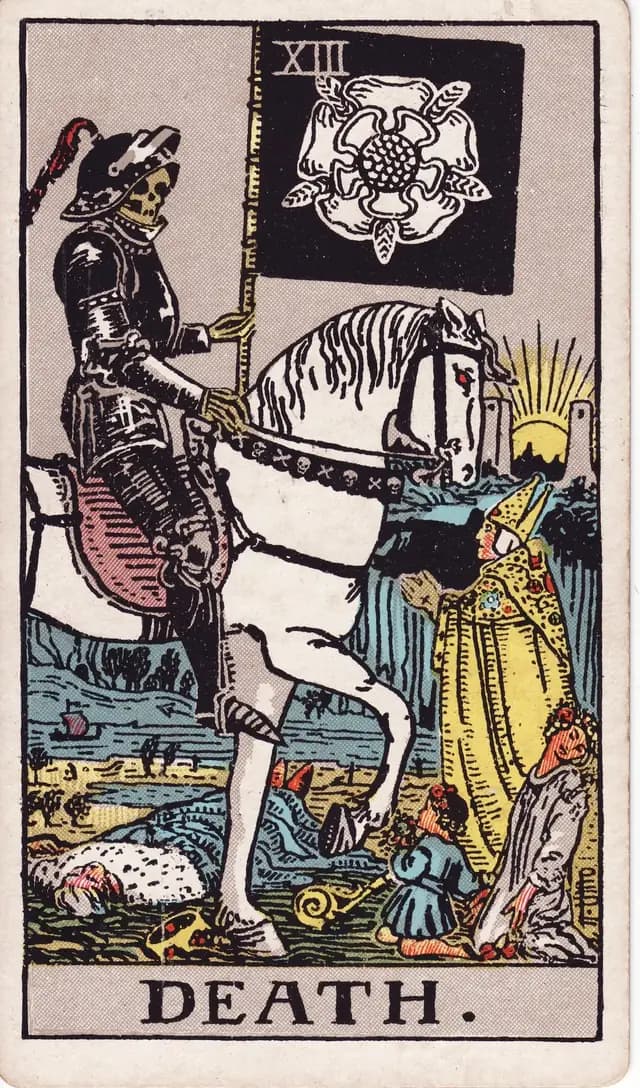
What Death in love means
Death in love speaks of a deep change in how love works for you, not of doom. An old pattern, role or rhythm between people has run its course and is clearing away. Whether this feels like an ending or a beginning depends on how gently you release the old shape. What remains after the clearing usually feels more honest than what you let go.
Picture two partners who still act like the newlyweds they were ten years ago. Children, ageing parents and new jobs have changed their lives, yet the old roles never moved. When they finally admit that version of the marriage is over, room opens for a grown-up closeness. Your own bond may be asking for the same honest goodbye to an outdated version of you both.
In love
Already together, you may feel the ground of your bond shifting under familiar routines. This change tends to arrive slowly, through new needs, new homes or new stages of family life. Couples who let the old habits end, such as constant checking in or silent sulking, often grow closer. Sometimes the honest change is a parting, and that too can be handled with care and respect.
At work
Deep change in love often spills into how you handle work, time and ambition. A new baby, a move or a breakup can end your old split between desk and home. Trying to keep the former schedule while life has changed usually leaves everyone short. Let the outdated routine go, and build a weekly plan that fits who you both are now.
Your next step
Name one habit in your love life that belonged to an earlier chapter and no longer fits. It might be a jealous check of the phone, a fixed role at festivals or an old grudge. Mark its ending simply, by saying it aloud or writing it down and tearing up the page. Then notice what fresh habit wants to grow in the space you have cleared.
- changing bond
- outgrown habits
- honest release
- new shape
The image behind this reading
A rising sun glows between two distant towers, promising you light after the old shape fades.[1]
Read these meanings as modern interpretations of the imagery in your 1909 Rider-Waite-Smith deck.