
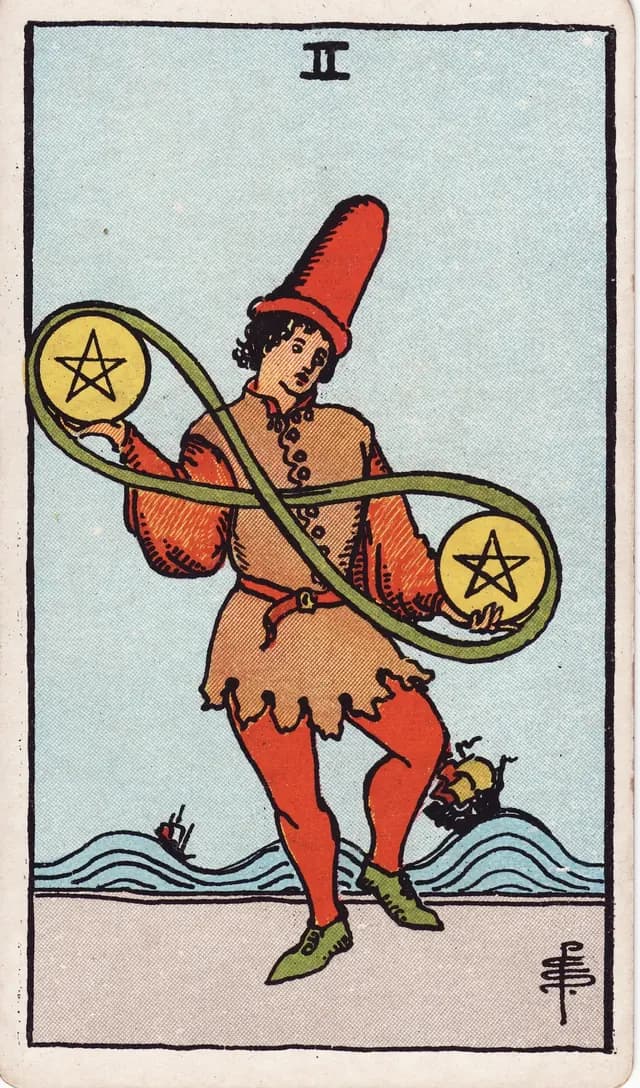
What Two of Pentacles yes or no means
Upright: Maybe, because you still need to balance competing demands.
Reversed: Leaning no, because your current load leaves little room.
Upright, the Two of Pentacles gives your question Maybe in Naksham's current card classification. Its two moving coins describe options that still compete for the same available attention. Check which demand takes priority before treating a flexible situation as a settled decision. The answer remains open because a workable balance depends on choices that the reading cannot make for you.
Reversed, this card receives Leaning no because the current load leaves too little room. Another request can exceed your capacity even when each individual task looks quite manageable. Name what would need to move or stop before considering the additional commitment again. The two orientations distinguish unsettled balance from overload, with practical limits providing the condition for any decision.
Explore Two of Pentacles with your own draw
Your draw can reveal any card in the deck.
In love
For a question about arranging time together, upright Maybe asks whether both schedules can adjust. A willing invitation still needs a date that does not leave one person repeatedly waiting. Reversed Leaning no points toward your existing overload before adding another promise of contact. Decide from actual availability and mutual interest, since neither orientation can answer for the other person's feelings.
At work
A second assignment brings a capacity question that fits this card's two competing coins. Upright Maybe asks whether your deadlines can coexist with a clear order of priority. Reversed Leaning no calls for reducing the load before taking on another moving part. Review actual task estimates with the project owner, so the decision rests on available hours and agreed expectations.
Your next step
Rewrite your question around the specific commitment you are considering, including its time demands. Place it beside existing duties and mark any hour that two promises both require. Ask what can change before seeking a firmer answer from another draw of the cards. This Two makes the practical condition visible through scheduling, where an honest limit helps more than hopeful juggling.
- upright maybe
- reversed overload
- capacity check
- competing options
The image behind this reading
You can see a gold coin in each hand joined by the same looping ribbon.[1]
Read these meanings as modern interpretations of the imagery in your 1909 Rider-Waite-Smith deck.