
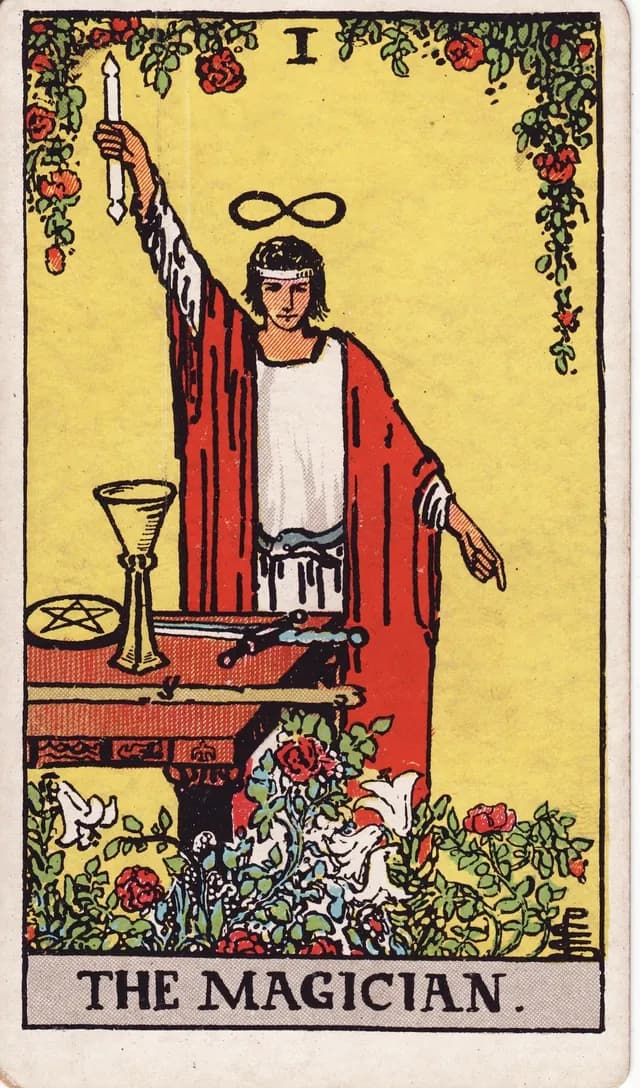
What The Magician yes or no means
Upright: Yes, because your skills can serve a clear aim.
Reversed: Leaning no, because your tools and aim need to align.
The Magician upright receives Yes in Naksham's current map, linking the answer with focused use of available skills. Apply that encouragement to an action you can prepare and carry out with a clear purpose. The reading favors doing the work rather than waiting for confidence to arrive without any practice. Check that the necessary tools, time, and permission are actually present before treating the plan as ready.
Reversed, the answer becomes Leaning no because scattered effort or missing alignment weakens the proposed next step. Consider a launch that has a strong presentation but no agreed owner for the essential final task. Clarify your role and the unfinished requirement before offering another promise about what the project can deliver. Both orientations ask whether ability has a practical route into action, while preserving their different current labels.
Explore The Magician with your own draw
Your draw can reveal any card in the deck.
In love
For love, upright Yes favors clear expression and a thoughtful action that invites a genuine response. Ask about sending an honest message or arranging time together rather than controlling how someone will feel. Reversed Leaning no highlights the need to compare your shared words with what actually happens afterward. A respectful answer from the other person remains more important than any encouragement in this reading.
At work
At work, the upright classification supports a proposal backed by the skill and materials needed to begin. Show your preparation through a sample, a clear brief, or a completed piece of the task. The reversal asks for a pause when attention is divided or a crucial resource remains unconfirmed. Resolve that specific gap before using the card's positive side to justify a larger commitment.
Your next step
Set your question around a task with a visible result and a clear measure of completion. Name the tools you already have, then check the one requirement that still needs confirmation. Let upright Yes encourage focused effort and reversed Leaning no prompt a repair to the plan. Keep the classification separate from the real evidence you gather by preparing and doing the work.
- focused yes
- reversed caution
- practical skill
- ready resources
The image behind this reading
The raised wand and downward gesture draw your attention to the figure's two differently directed hands.[1]
Read these meanings as modern interpretations of the imagery in your 1909 Rider-Waite-Smith deck.