
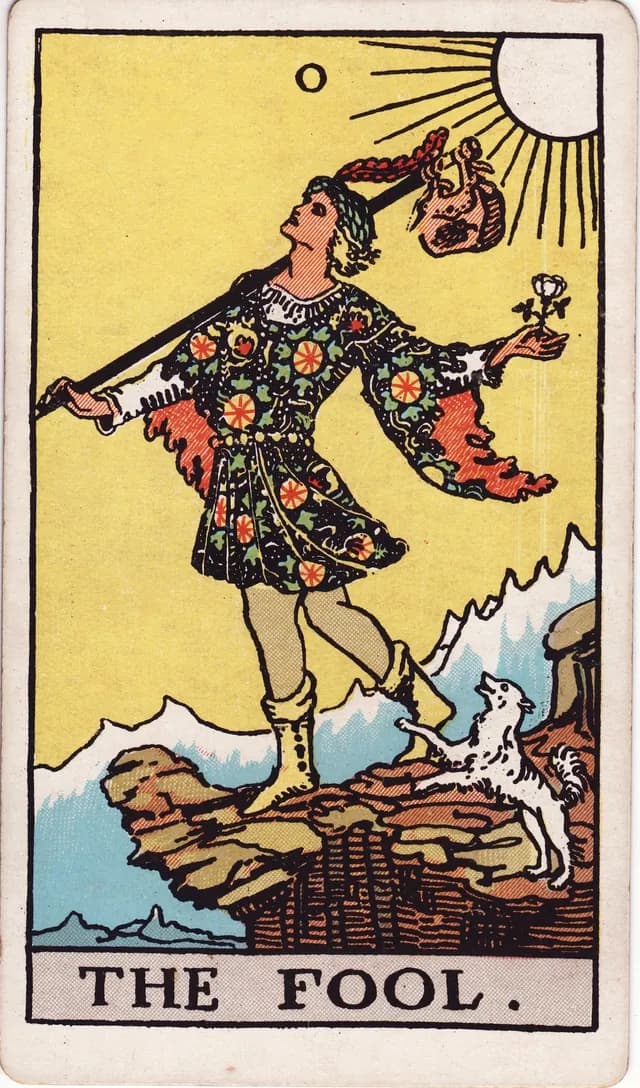
What The Fool yes or no means
Upright: Yes, because you can begin with an open first step.
Reversed: Maybe, because your next leap still needs firmer footing.
The Fool upright receives Yes in Naksham's current map, favoring a fresh start over standing still. Apply that answer to a first step you can actually choose, rather than an entire unknown future. The reading encourages openness while asking that ordinary facts remain part of your decision. A useful question names the action, the timing, and the limit of what you are accepting.
Reversed, the classification is Maybe because the beginning needs a closer look before you proceed. Consider an invitation that sounds exciting while leaving travel, timing, or shared expectations unresolved. Check those details before deciding whether the leap fits the resources and freedom available to you. The difference between these orientations concerns readiness to begin, not a promise about the eventual result.
Explore The Fool with your own draw
Your draw can reveal any card in the deck.
In love
For a relationship question, the upright answer favors an honest invitation or a fresh shared experience. Ask whether you should suggest a meeting rather than whether another person will love you forever. Reversed Maybe calls for clearer expectations before adding more time or hope to the connection. Let the person's actual answer guide what happens next, including any boundary they choose to set.
At work
For work, upright Yes supports testing an unfamiliar idea when the first commitment stays manageable. Define your experiment so the result can teach something even if the original idea changes. Reversed Maybe asks whether preparation, permission, or available time is still missing from the proposal. Check that gap with the relevant person before treating enthusiasm as enough reason to proceed.
Your next step
Phrase your question around one new action that remains within your own power to take. List what beginning requires and what would make you pause before committing further time. Use the upright answer as encouragement to try, or the reversal as a preparation prompt. Keep the final choice tied to facts, consent, and a limit you can comfortably maintain.
- upright yes
- reversed maybe
- new choice
- checked beginning
The image behind this reading
You can see the white dog rise beside the traveler at the very edge of the cliff.[1]
Read these meanings as modern interpretations of the imagery in your 1909 Rider-Waite-Smith deck.