
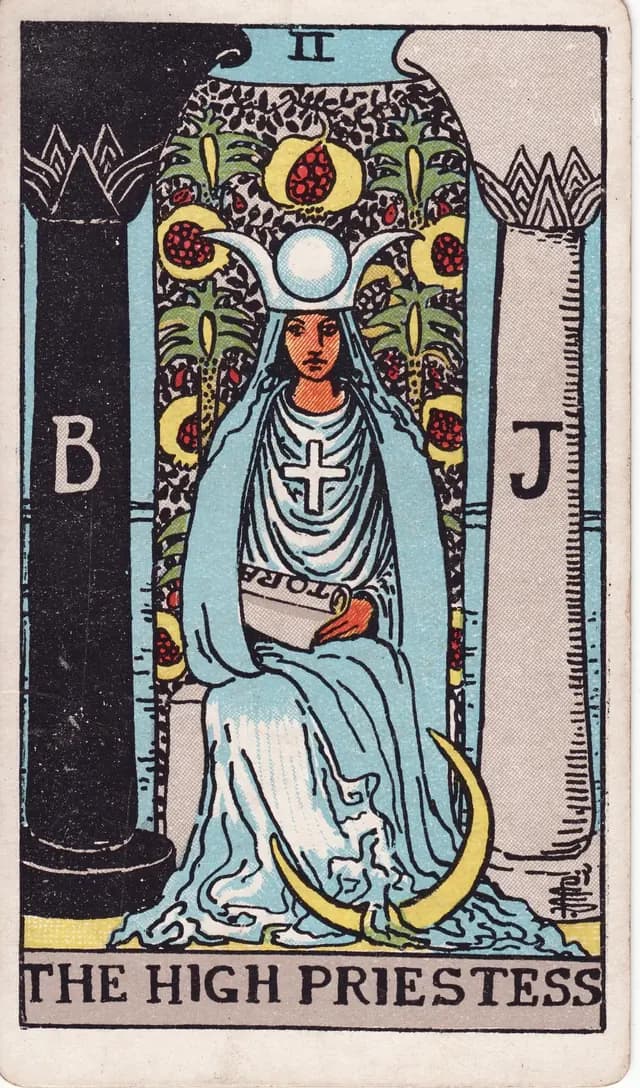
What The High Priestess yes or no means
Upright: Maybe, because you need space to understand the full picture.
Reversed: Leaning no, because your view still lacks key facts.
The High Priestess upright receives Maybe in Naksham's current map, leaving the question open for further understanding. Treat that answer as permission to pause rather than pressure to choose before your thoughts are clear. Notice which part of the situation depends on facts and which concerns your own private preference. A useful next step gives both kinds of information room without pretending the reading can settle either one.
Reversed, the label is Leaning no because the current view lacks something needed for a sound next step. Consider a shared proposal where an important condition has been left vague or never discussed openly. Ask for that condition in plain language before adding your agreement to the arrangement. The two labels preserve different levels of caution while keeping your next step focused on what remains unclear.
Explore The High Priestess with your own draw
Your draw can reveal any card in the deck.
In love
For love, upright Maybe leaves their response open and invites you to listen before drawing a firm conclusion. Ask about the actual connection rather than seeking a card to confirm feelings that have not been shared. Reversed Leaning no calls for clearer conversation when important expectations remain hidden behind guesses or long pauses. Keep consent and spoken boundaries central, whatever private sense of closeness accompanies the reading for you.
At work
At work, this card suits a decision where evidence is incomplete or your understanding needs review. Upright Maybe suggests gathering the relevant facts before adding a firm answer to the team's plan. Reversed Leaning no asks you to address the missing information that currently prevents a clear agreement. Speak to the responsible person and record the answer instead of replacing uncertainty with an informal theory.
Your next step
Write your question beside two columns, one for known facts and one for matters that remain unanswered. Put a personal preference in its own sentence so it does not get mistaken for external evidence. Choose the missing answer that most affects your decision and ask for it through the appropriate conversation. Return to the choice after that information arrives, keeping the card's label as reflection rather than a command.
- upright maybe
- reversed caution
- unanswered question
- quiet understanding
The image behind this reading
The patterned veil hangs behind the figure as you look between the dark and light pillars.[1]
Read these meanings as modern interpretations of the imagery in your 1909 Rider-Waite-Smith deck.