
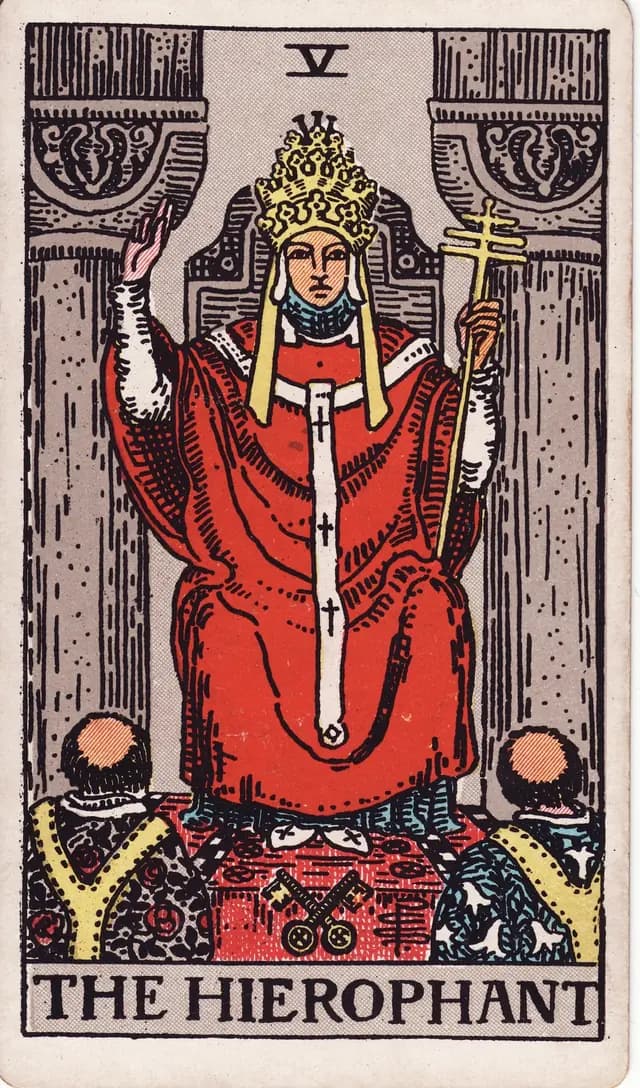
What The Hierophant yes or no means
Upright: Leaning yes, because trusted guidance can help your next step.
Reversed: Maybe, because your usual path needs a fresh look.
The Hierophant upright receives Leaning yes in Naksham's current map, favoring guidance and a proven approach. Check whether the established route actually teaches what you need or supports a freely chosen agreement. The qualified label encourages preparation through experience rather than unquestioning obedience to an official voice. A useful decision keeps the method's purpose visible alongside the values you bring to the choice.
Reversed, the answer is Maybe because the usual path needs examination before you accept its terms. Consider joining a course whose reputation sounds appealing while its teaching style remains unclear. Ask to see the material and compare it with how you learn most effectively. Both orientations address guidance, but the reversal leaves room to question whether this particular framework fits.
Explore The Hierophant with your own draw
Your draw can reveal any card in the deck.
In love
For love, upright Leaning yes supports discussing commitment through values both people genuinely want to share. Ask about a chosen next step rather than whether tradition guarantees a lasting relationship. Reversed Maybe invites you to examine outside expectations that could be steering the proposal. Consent and a clear conversation determine the actual agreement, whatever meaning a ceremony holds for others.
At work
For work, the upright answer favors training or experienced advice when the route matches your task. Ask how the recommended process has helped people facing a comparable problem or learning need. Reversed Maybe calls for checking whether familiar requirements have become disconnected from useful results. A course outline or small practice exercise gives more concrete evidence than reputation alone can offer.
Your next step
Choose a question about a method you can examine, such as seeking guidance before beginning. Name the standard that matters and ask how the proposed approach helps you meet it. Use upright Leaning yes as encouragement to learn, while reversed Maybe opens a review of fit. Keep responsibility for the final choice with the people affected rather than transferring it to a symbol.
- qualified yes
- reversed maybe
- proven approach
- chosen guidance
The image behind this reading
The three-tiered crown rises above the teacher's face as you look between the decorated stone pillars.[1]
Read these meanings as modern interpretations of the imagery in your 1909 Rider-Waite-Smith deck.