
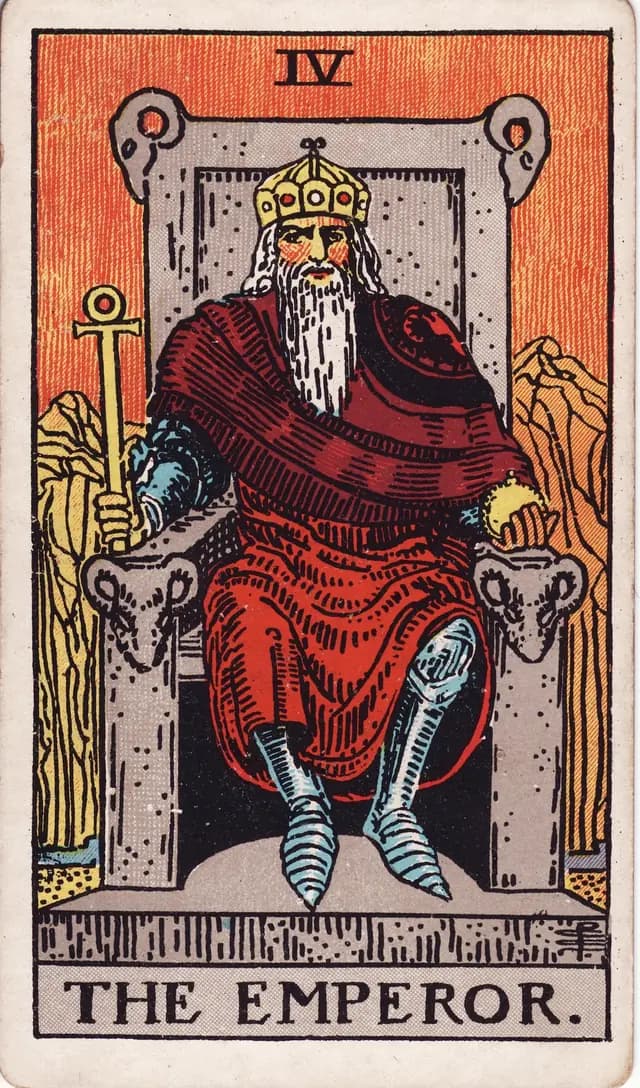
What The Emperor yes or no means
Upright: Yes, because your clear plan supports a steady next step.
Reversed: Leaning no, because your plan needs fairer, steadier limits.
The Emperor upright receives Yes in Naksham's current map, favoring a clear plan supported by steady responsibility. Apply that answer to a choice you can organize and maintain rather than a result outside your control. Check who does the work, which limits apply, and whether the people affected have agreed to the arrangement. A useful Yes here encourages a sound framework without promising that strict planning removes every possible obstacle.
Reversed, the answer is Leaning no because the current structure needs a closer look before you proceed. Consider a proposal that assigns duties clearly but gives one person no voice in decisions affecting their work. Review your authority, responsibilities, and right to ask for changes before accepting the arrangement as it stands. Both orientations concern structure, while the reversal highlights the practical weakness in a plan that cannot adjust fairly.
Explore The Emperor with your own draw
Your draw can reveal any card in the deck.
In love
For love, upright Yes supports discussing a shared commitment when both people want clear and dependable terms. Ask about the next agreement you can make together rather than whether someone will remain forever loyal. Reversed Leaning no calls attention to unequal control or rules that leave little room for your own preferences. A useful reading brings those terms into conversation instead of using certainty to hurry either person toward agreement.
At work
At work, the upright classification supports a plan with defined ownership, realistic deadlines, and reliable progress reviews. Check that your responsibilities come with the information and authority needed to carry them out in practice. Reversed Leaning no asks whether unclear leadership or rigid approval rules would prevent the task from moving forward. Resolve that structural gap before adding your name to a commitment whose conditions you cannot reasonably meet.
Your next step
Write the proposed action with its owner, deadline, and limit before deciding how the card's answer applies. Ask whether everyone affected understands the plan and can raise a concern without losing their place in it. Let upright Yes support the next organized step and reversed Leaning no prompt a review of the framework. Your decision still rests on the actual terms, not on how firm or reassuring the image appears.
- structured yes
- reversed caution
- clear ownership
- fair agreement
The image behind this reading
The small orb sits in one hand as you notice the upright staff held in the other.[1]
Read these meanings as modern interpretations of the imagery in your 1909 Rider-Waite-Smith deck.