
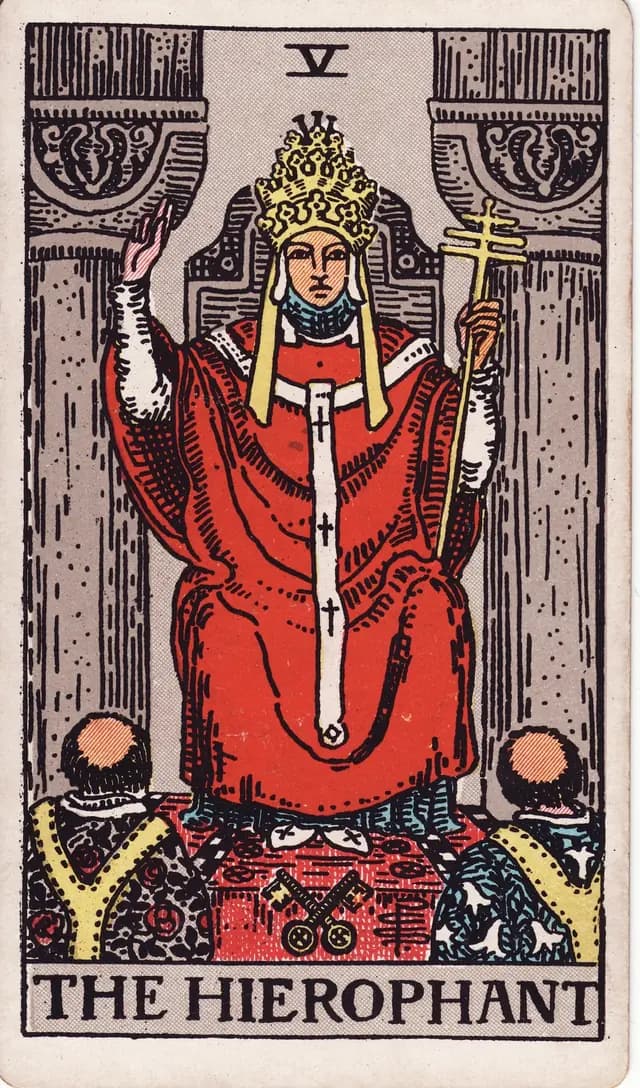
What The Hierophant as a person means
The Hierophant as a person describes someone who shares knowledge and values continuity within a community. This pattern appears through teaching, keeping meaningful customs, and helping newcomers understand an established practice. Notice how your guidance becomes useful when it explains reasons rather than asking for imitation. The card describes a changeable role in learning, not a permanent right to define everyone else's beliefs.
Picture an experienced group member showing a newcomer why a familiar meeting follows particular steps. Their explanation gives you a way to participate without pretending the customs are already obvious. Notice whether the same person welcomes a sensible question about doing one part differently. A helpful guide carries experience forward while making room for the people who are learning now.
Explore The Hierophant with your own draw
Your draw can reveal any card in the deck.
In love
As a partner, this pattern values shared customs and a clear understanding of the relationship. Discuss which traditions your companion enjoys rather than assuming they want every familiar milestone. Offer your own preferences so the bond develops a chosen rhythm that belongs to both people. A steady sense of belonging can include differences when neither partner must become the other's student.
At work
At work, a Hierophant pattern appears in mentors who explain professional standards and encourage careful practice. Bring your questions to the person who can connect the rule with an actual example. Notice whether knowledge becomes easier to use after their guidance or remains dependent on repeated approval. The strongest contribution helps others learn enough to make sound choices without constant supervision afterward.
Your next step
Teach one familiar task by explaining its purpose before demonstrating the steps you usually follow. Invite the learner to ask questions and show how they understand the method in practice. Listen for a useful improvement instead of treating every difference as a failure to learn. This expresses your experience through shared knowledge while keeping tradition responsive to the people using it.
- patient teacher
- community guide
- shared learning
- living tradition
The image behind this reading
The patterned robes distinguish the students as you compare their positions below the seated figure.[1]
Read these meanings as modern interpretations of the imagery in your 1909 Rider-Waite-Smith deck.