
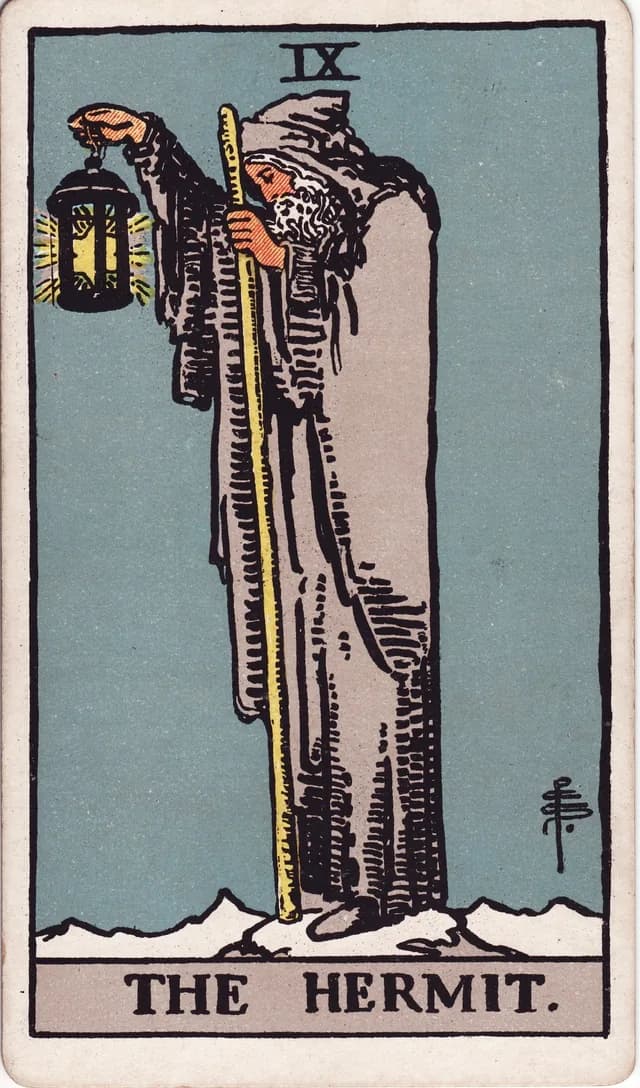
What The Hermit yes or no means
Upright: Maybe, because your answer needs quiet thought before action.
Reversed: Leaning no, because your thinking needs useful contact and feedback.
The Hermit upright receives Maybe in Naksham's current map, leaving the answer open for careful personal reflection. Apply the pause to a choice where your own priorities need attention before another outside opinion arrives. Notice what remains unclear and whether quiet review can actually help that part of the question. A useful Maybe creates space for understanding without pretending the card already holds a hidden positive answer.
Reversed, the label is Leaning no because withdrawal can leave the proposed decision without needed contact or feedback. Consider a plan developed alone while the people expected to use it have never been asked. Share a small version and request the information your private review has been unable to supply. The orientations distinguish useful solitude from a closed process that now needs to return to shared reality.
Explore The Hermit with your own draw
Your draw can reveal any card in the deck.
In love
For love, upright Maybe supports reflection on your needs before asking the relationship to supply every answer. Write what you want from contact and then discuss the part that requires another person's agreement. Reversed Leaning no draws attention to distance that prevents a shared question from being addressed openly. Neither label can establish whether someone secretly cares or intends to return after a period apart.
At work
At work, upright Maybe favors a considered review before you accept a role or announce a decision. Identify the question that needs independent thought and the evidence that would help you judge it. Reversed Leaning no asks whether working alone has excluded feedback necessary for a practical next step. Bring the draft to a relevant colleague before spending more time perfecting assumptions that have never been checked.
Your next step
Phrase your question around a decision whose next useful step can be clearly named and completed. Separate the part that needs private reflection from the part only a real conversation can answer. Use upright Maybe for purposeful thought and reversed Leaning no to examine where contact is missing. Return to the choice after that work instead of drawing repeatedly until the label sounds more definite.
- reflective maybe
- reversed caution
- quiet review
- needed feedback
The image behind this reading
The snowy ridge lies beneath the figure as you look along the uneven ground below the staff.[1]
Read these meanings as modern interpretations of the imagery in your 1909 Rider-Waite-Smith deck.