
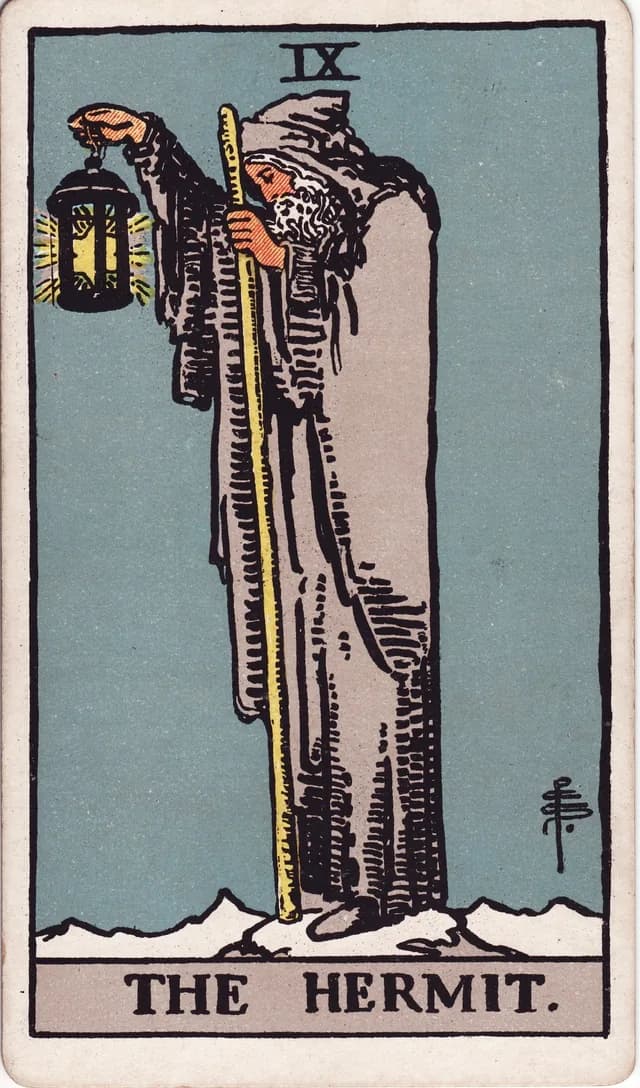
What The Hermit as a person means
The Hermit as a person describes someone who values independent thought and makes room for careful personal reflection. This pattern appears through listening, reviewing experience, and choosing words after the first rush of opinion has passed. Notice how your quiet attention becomes useful when it returns with something relevant to the shared question. The card describes a changeable approach to thinking, not a fixed identity as someone who dislikes all company.
Picture a friend who takes a walk before answering a question that touches an important personal choice. Their time alone gives you a considered response rather than an immediate opinion borrowed from the group. Notice whether they also return when promised and make room for information they had not considered privately. A reflective person can value independence while remaining available to the conversations that give thought a practical setting.
Explore The Hermit with your own draw
Your draw can reveal any card in the deck.
In love
As a partner, this pattern values personal space alongside the time freely chosen for the relationship. Discuss how much contact feels meaningful to you and what a quiet period should look like in practice. Avoid treating separate interests as proof of distance or expecting one partner to enjoy constant shared activity. A reflective bond works through clear agreements that leave both people able to request closeness and solitude.
At work
At work, a Hermit pattern appears in researchers and colleagues who think carefully before offering a conclusion. Give your independent review a clear purpose and share enough progress for others to plan around it. Notice whether the person welcomes feedback instead of protecting every idea from being seen before it feels complete. Thoughtful work becomes more useful when depth and communication are treated as parts of the same responsibility.
Your next step
Choose a quiet period for one question and decide what useful insight you want to bring back afterward. Put aside the pressure to produce an impressive answer and write what the available evidence actually supports. Share that conclusion with someone affected, including the limit of what you still do not know. This practices the Hermit's independent thought while keeping it connected to the people who can respond and contribute.
- reflective thinker
- chosen solitude
- independent judgment
- considered words
The image behind this reading
The gray cloak wraps the standing figure as you notice the narrow opening around the lantern arm.[1]
Read these meanings as modern interpretations of the imagery in your 1909 Rider-Waite-Smith deck.