
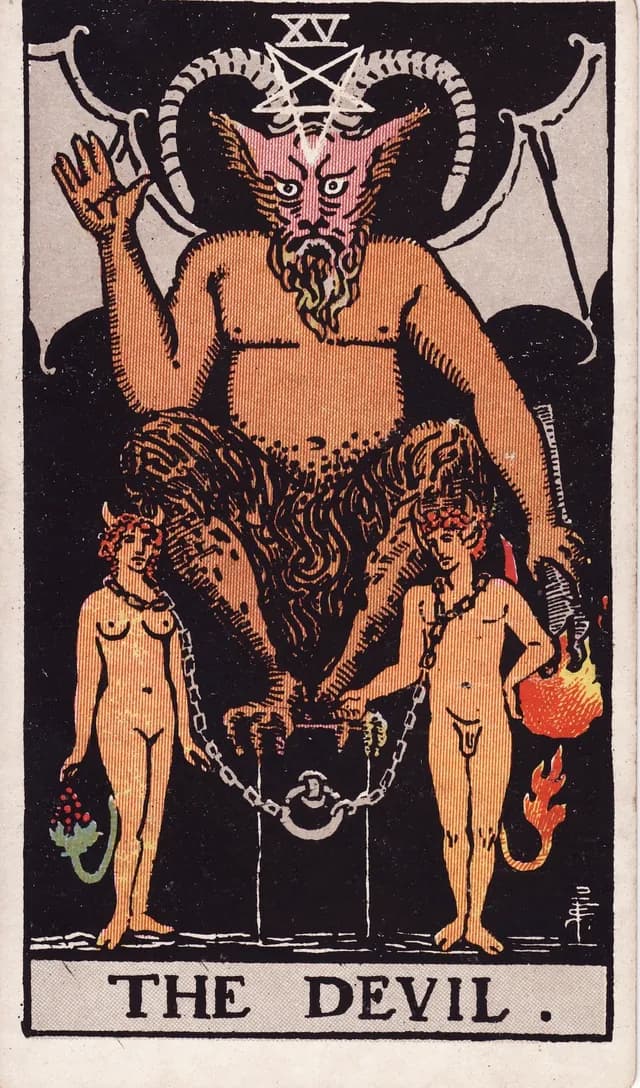
What The Devil yes or no means
Upright: No, because this pull leaves you less room to choose.
Reversed: Maybe, because your old ties still need time to loosen.
The Devil upright receives No in Naksham's current map because attachment can obscure the cost of agreement. Apply that answer to your proposed action, especially when a brief reward makes a restrictive arrangement appealing. Examine what must be given up before treating the strength of desire as a reason to proceed. The reading asks for a clearer choice, without deciding that wanting something is itself wrong or shameful.
Reversed, the answer is Maybe because loosening the attachment does not settle every practical condition. A new limit can open room for your decision while familiar pressures still remain in place. Check whether the offer has actually changed or merely sounds more attractive after a difficult conversation. The two orientations describe different stages of the same attachment, with neither guaranteeing what happens after your choice.
Explore The Devil with your own draw
Your draw can reveal any card in the deck.
In love
For love questions, upright No asks whether the proposed contact reinforces pressure, dependence, or unequal access. Keep the question centered on an action you control, such as accepting the same unclear arrangement again. Reversed Maybe invites attention to whether both people now respect the boundary that previously caused friction. A clear agreement and its repeated observance matter more than another promise made during an intense exchange.
At work
For work, upright No highlights the cost of an attractive offer that further narrows your options. Compare the role's actual demands with the reward being emphasized before agreeing to greater availability. Reversed Maybe leaves the choice open when revised terms begin to reduce that familiar constraint. Ask for the change in writing so the decision rests on an arrangement that can be checked afterward.
Your next step
Write the immediate reward on one side of a page and its continuing requirements on the other. Include the time, attention, and freedom your proposed agreement would require after the first excitement settles. Use upright No to pause the repeated exchange, or reversed Maybe to assess the change already underway. The final choice belongs with the real terms, including any limit that makes agreement possible or worth declining.
- upright no
- reversed maybe
- restricted choice
- release condition
The image behind this reading
You can see the curved horns above the creature's face and the smaller figures below.[1]
Read these meanings as modern interpretations of the imagery in your 1909 Rider-Waite-Smith deck.