
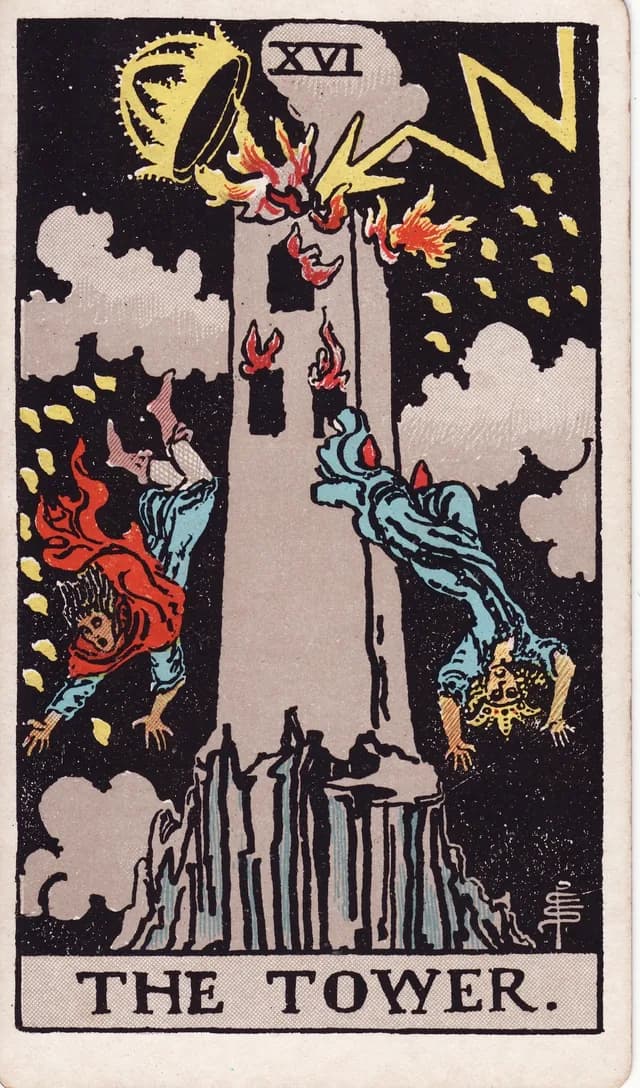
What The Tower yes or no means
Upright: No, because your next step needs a sounder base.
Reversed: Leaning no, because your plan still rests on shaky ground.
The Tower upright receives No in Naksham's current map, pointing toward a disrupted or unreliable basis for proceeding. Apply that answer to the arrangement named in your question rather than predicting an unrelated disaster. Check which assumption has failed and whether the proposed step would continue relying on it. Assess the foundation before investing more effort in a structure whose basic assumptions already need review.
Reversed, the live answer is Leaning no because the unsettled foundation still calls for caution. The quieter orientation does not automatically reverse the upright refusal or turn delayed change into reliable support. Ask whether your plan includes a verified repair or only a hope that the weakness will remain unnoticed. Both orientations favor examining the base, with a different emphasis on visible disruption and the change being resisted.
Explore The Tower with your own draw
Your draw can reveal any card in the deck.
In love
For love, upright No asks you to pause a choice built on an understanding that has been shaken. Clarify the actual agreement before adding a larger promise to a bond whose terms remain disputed. Reversed Leaning no highlights the issue that both people avoid while hoping the surface will settle itself. A direct discussion informs the decision without treating the card as a verdict on whether love exists.
At work
For work, the upright answer questions proceeding with a plan after its central assumption has failed. Review the dependency, deadline, or responsibility that your next step would require before asking the team to continue. Reversed Leaning no keeps attention on an unresolved weakness even when the problem has stopped attracting immediate notice. A documented repair matters more than a calm meeting where the same underlying gap remains untouched.
Your next step
Identify the single assumption your proposed decision needs to be true for the plan to work. Find a current record or responsible person who can confirm whether that assumption still holds. Use the upright No or reversed Leaning no as a prompt to pause until the answer is clearer. Ground the decision in verified repairs, without expecting the card to guarantee a stronger outcome afterward.
- upright no
- reversed caution
- foundation check
- unsettled plan
The image behind this reading
Flames rise from the narrow windows as you look down the tower toward its rocky base.[1]
Read these meanings as modern interpretations of the imagery in your 1909 Rider-Waite-Smith deck.