
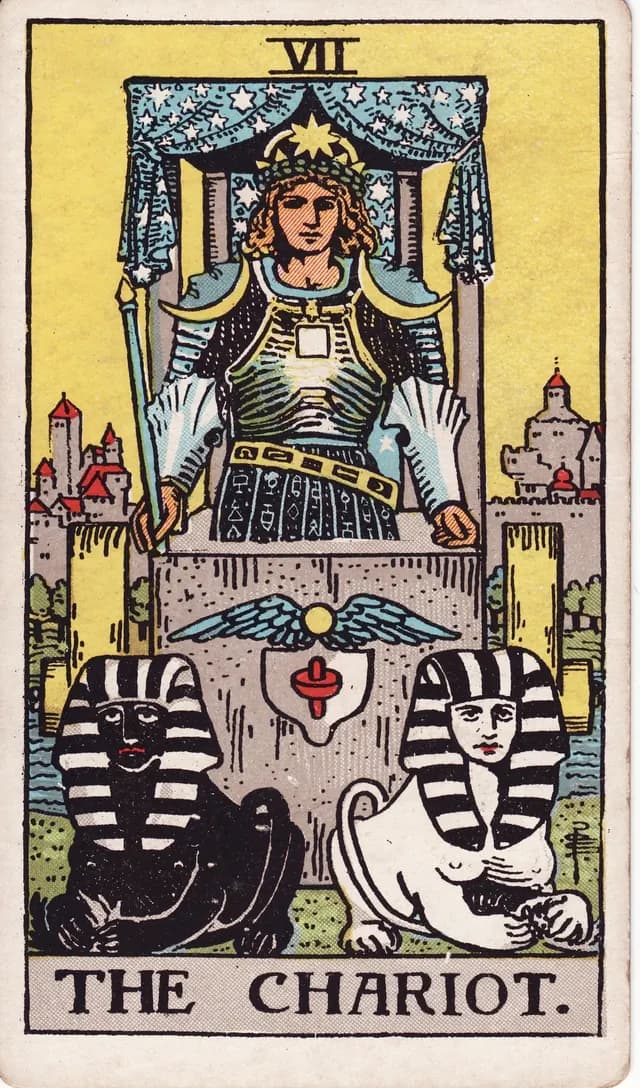
What The Chariot yes or no means
Upright: Yes, because your focused effort can serve a clear goal.
Reversed: Leaning no, because your effort is pulling in different directions.
The Chariot upright receives Yes in Naksham's current map, connecting the answer with focused and coordinated effort. Apply the encouragement to a step you can prepare rather than a victory outside your control. Check whether the aim is clear and whether the people involved have agreed on the direction. A useful Yes supports movement with purpose without claiming that determination removes every obstacle along the route.
Reversed, the answer is Leaning no because competing forces or excessive pressure undermine the proposed next step. Consider a project where two decision makers keep asking your team for incompatible versions of the result. Request one agreed priority before increasing the pace or promising another quick attempt at completion. The two orientations preserve different answers while keeping direction and coordination central to the practical reading.
Explore The Chariot with your own draw
Your draw can reveal any card in the deck.
In love
For love, upright Yes supports making a clear effort when the other person's boundaries are respected. Ask whether you should suggest a visit rather than whether persistence will make someone want a relationship. Reversed Leaning no asks for a pause when pace or direction has become a struggle between people. Listen to the actual response before treating a favorable reading as permission to keep pressing.
At work
At work, upright Yes favors moving a prepared task forward with a clear owner and destination. Confirm the resources your next stage requires and the decision needed if competing requests arrive. Reversed Leaning no highlights a plan whose pace hides unresolved conflict about what should be delivered. Resolve the priority before demanding more effort from people already working toward different versions of success.
Your next step
Frame your question around a specific action with a result that can be checked afterward. Name the destination, the available route, and the point where another person's agreement is required. Use upright Yes to encourage focused work and reversed Leaning no to inspect the conflicting demands. Keep the final decision tied to readiness rather than the appeal of feeling unstoppable after a draw.
- focused yes
- reversed caution
- clear goal
- coordinated effort
The image behind this reading
The winged emblem sits on the chariot's front as you look between the two resting sphinxes.[1]
Read these meanings as modern interpretations of the imagery in your 1909 Rider-Waite-Smith deck.