
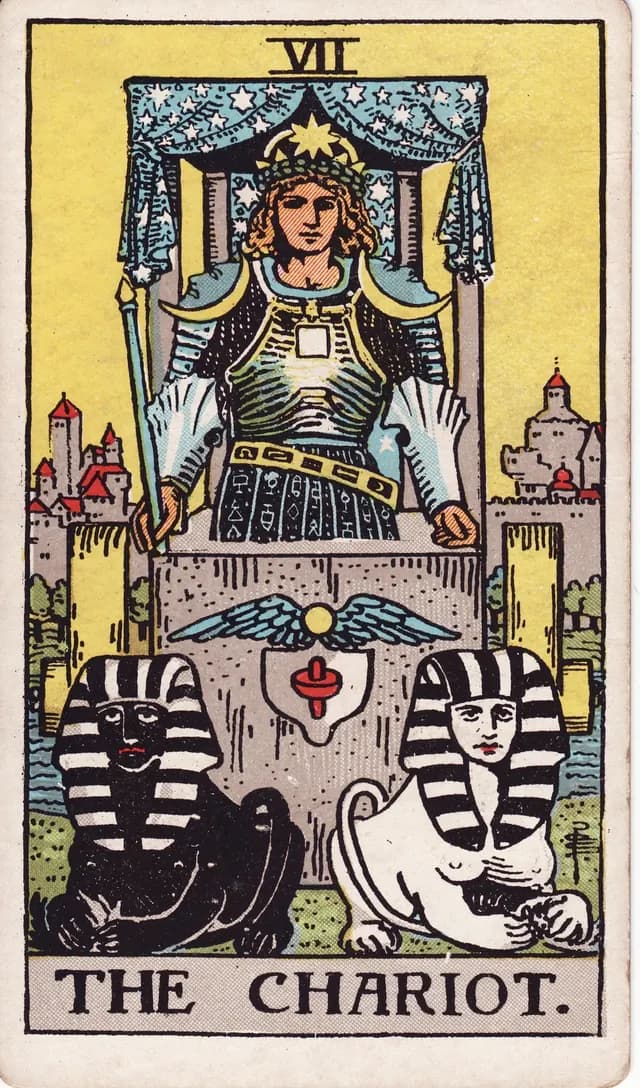
What The Chariot as a person means
The Chariot as a person describes someone who gathers effort around a goal and takes initiative. This pattern appears through choosing priorities, organizing movement, and continuing when the task needs steady attention. Notice how your drive becomes useful when it includes listening to the people sharing the route. The card describes a practice of focus rather than a permanent identity built around always winning.
Picture a teammate who names the next goal and helps the group decide what can wait. Their energy gives you a clearer path because effort now has a destination everyone can understand. Notice whether they remain open to feedback when a change in circumstances affects the original route. A focused person can adjust the method without treating every pause as a challenge to personal strength.
Explore The Chariot with your own draw
Your draw can reveal any card in the deck.
In love
As a partner, this pattern brings initiative and willingness to make practical effort for shared time. Appreciate your companion's drive while discussing the pace that leaves both people comfortable with the connection. A determined person still needs to ask before turning a private wish into a shared plan. The strongest expression includes room for separate goals rather than measuring love by constant movement toward one destination.
At work
At work, a Chariot pattern appears in people who coordinate tasks and keep attention on the result. Give your own drive a clear purpose by checking priorities before volunteering for another urgent assignment. Notice whether the person shares useful information and adjusts workloads when the team reaches a genuine limit. Effective focus helps others move with clarity instead of making every difficulty their responsibility to overcome alone.
Your next step
Pick a goal that matters and remove one competing task from the next period of work. Tell anyone affected what you will complete and when they can expect a useful update. Ask for feedback at that point rather than defending the original plan through every small change. This practices the Chariot's direction while making cooperation part of your strength instead of an interruption to it.
- focused driver
- active organizer
- clear priorities
- responsive leadership
The image behind this reading
The city walls stand behind the driver as you trace the distance between the buildings and chariot.[1]
Read these meanings as modern interpretations of the imagery in your 1909 Rider-Waite-Smith deck.