
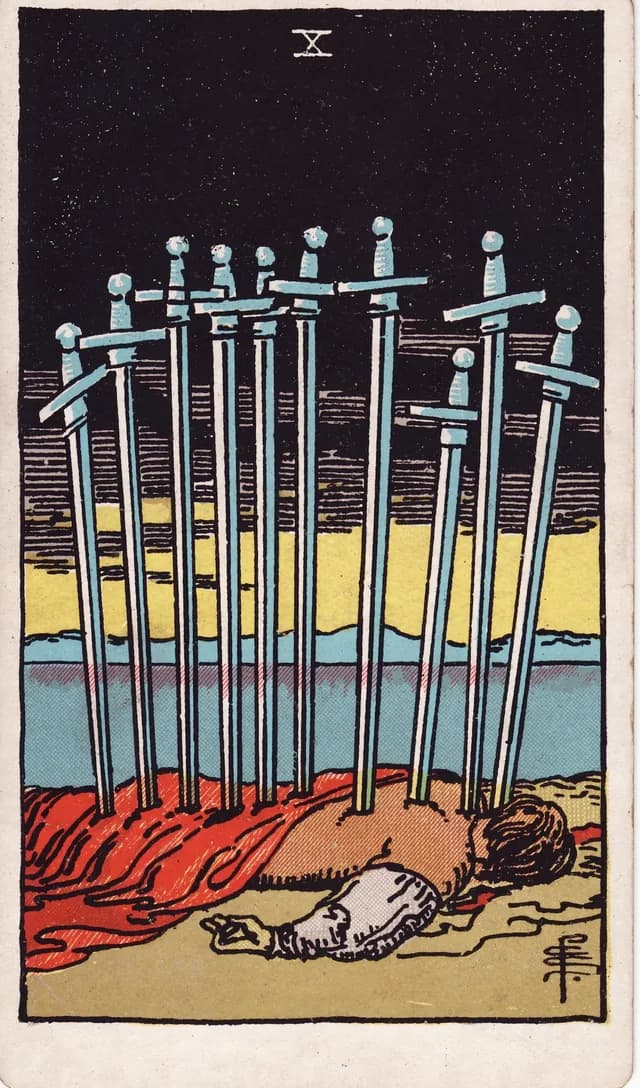
What Ten of Swords as intentions means
The Ten of Swords as intentions suggests a possible plan to stop investing in a chapter already exhausted. That can mean closing a project, ending an agreement, or declining to repeat an unsuccessful approach. For your reading, distinguish a stated decision from an ending you imagine because the situation feels painful. The card cannot reveal a private plan, so confirmation must come from words and concrete arrangements.
Someone may say the current approach has run its course without explaining what will replace it. Ask which part is closing, when the change takes effect, and what responsibilities remain for you. A clear ending can still require a handover rather than an abrupt disappearance from shared obligations. The Ten gives the plan a boundary, with its practical meaning shown by what the person actually closes.
Explore Ten of Swords with your own draw
Your draw can reveal any card in the deck.
In love
A plan to end contact needs clear words rather than hints that leave you guessing about the relationship. If the decision is yours, state the boundary without using the card as authority over the other person. Necessary arrangements can be discussed separately from a demand to continue the emotional conversation indefinitely. The Ten supports clarity around a possible ending, with respect shown through honest terms and freely chosen participation.
At work
An intention to close a project should identify what stops and which obligations still need completion. Ask who will receive your records, communicate the decision, and resolve any remaining work with the team. Ending effort does not mean abandoning responsibility for the way the closure affects other people. The Ten becomes practical through a handover, allowing the completed chapter to stay closed without leaving avoidable confusion.
Your next step
Write what you intend to stop and why further effort no longer serves the original purpose. Separate that choice from any wish to punish someone or make the ending feel more dramatic. List the remaining responsibilities and choose a clear way to communicate the boundary to those affected. The Ten turns a final decision into clear action rather than a threat held over an unfinished conversation.
- planned closure
- final handover
- ending effort
- clear boundary
The image behind this reading
You see the ten sword hilts rising in a row above the figure lying beside the water.[1]
Read these meanings as modern interpretations of the imagery in your 1909 Rider-Waite-Smith deck.