
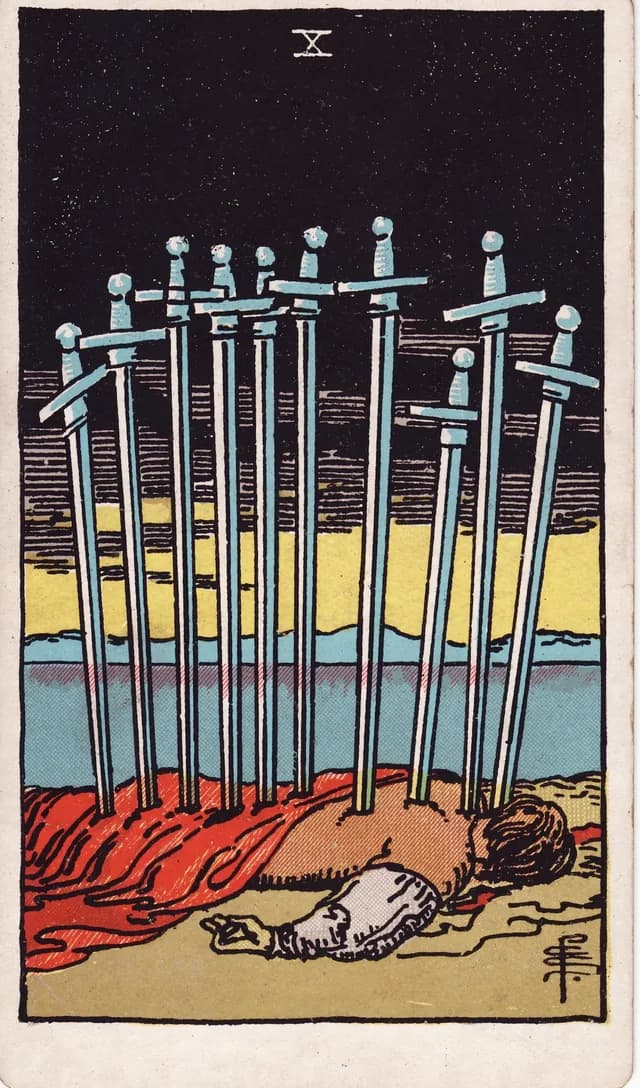
What Ten of Swords as a person means
The Ten of Swords as a person describes someone whose energy feels spent after an ending. Their strength can appear in acknowledging what no longer works instead of demanding another round of effort. If this reflects you, the growth area is keeping the loss from becoming a complete identity. The card describes a present pattern, without diagnosing anyone or fixing their future around one difficult chapter.
This person can resemble a colleague who speaks about a closed venture as though no useful experience remains. Ask what they completed and what you saw them learn before accepting that total account. The foreground figure makes the ending vivid, while the wider landscape keeps more of the scene in view. A fuller description can honor the setback without pretending that the person’s abilities or choices ended alongside it.
Explore Ten of Swords with your own draw
Your draw can reveal any card in the deck.
In love
Someone after a difficult breakup can speak firmly about an ending while feeling uncertain about ordinary closeness. Ask what contact they welcome now rather than assuming your care should change their readiness. If this describes you, state a present boundary without making a permanent declaration about every future relationship. The Ten supports a wider view of the person, with the ending respected and no new bond demanded.
At work
A colleague familiar with project failure can help when others avoid admitting that an approach is exhausted. Invite a clear account of the evidence rather than a broad claim that nothing ever works. Their experience can help your team close a method responsibly and preserve useful lessons from it. The Ten becomes constructive when finality is applied to the actual project instead of every possible next idea.
Your next step
Describe yourself through one current value or skill that does not depend on the chapter that ended. Then name the loss accurately, giving it space without allowing it to replace that fuller description. Choose a small responsibility that uses the skill while respecting the limits of your current circumstances. This gives the Ten a growth path through honest continuity, without requiring a triumphant story about the past.
- honest finality
- spent effort
- clear closure
- wider identity
The image behind this reading
You notice the outstretched hand near the ground beside the fallen figure and the red cloth.[1]
Read these meanings as modern interpretations of the imagery in your 1909 Rider-Waite-Smith deck.