
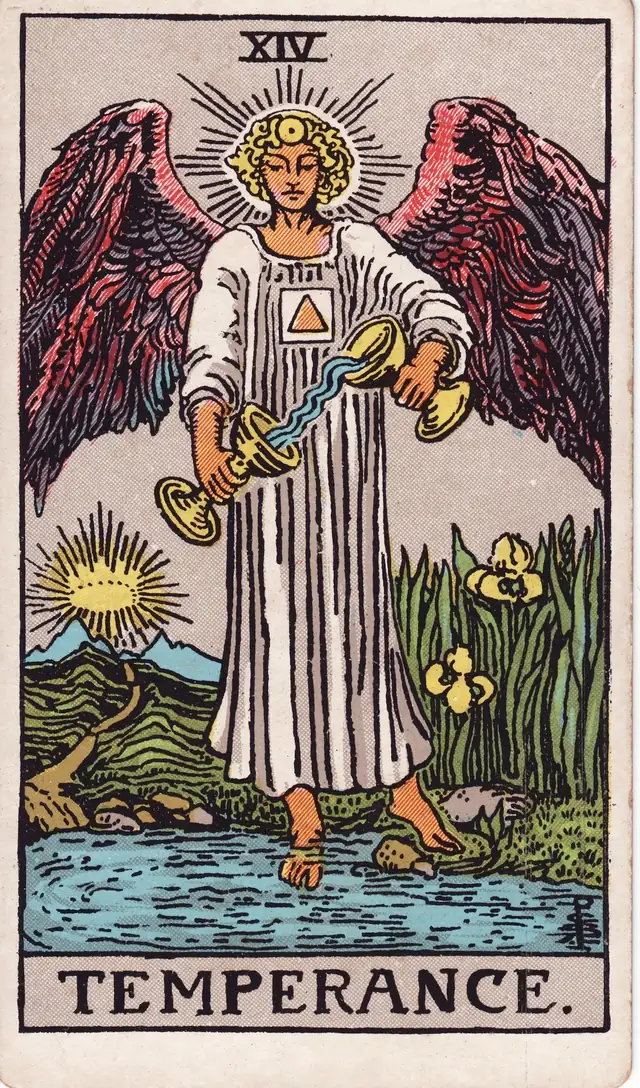
What Temperance as intentions means
Temperance as intentions suggests a possible plan to combine different needs through patient adjustment rather than sudden overhaul. The proposed direction favors a workable rhythm, with both people's preferences included in the way the arrangement develops. Ask which difference the person wants to resolve and what practical compromise they are actually offering you. A calm proposal suggests a direction, while the intention becomes credible through adjustments that are carried out.
Imagine two colleagues proposing a shared process that combines one person's careful planning with another's faster trials. The idea needs agreed checkpoints so neither style quietly becomes the only method the team actually follows. Ask how your contribution fits the trial and which signs will show that the balance needs changing. A completed trial gives the plan evidence beyond a general wish for everyone to work together smoothly.
Explore Temperance with your own draw
Your draw can reveal any card in the deck.
In love
In love, this card suggests a possible intention to find a pace that respects two people's different needs. Ask what shared time, separate time, and contact would look like under the arrangement being proposed to you. A promise to be patient still needs terms that both people can understand and freely accept. The plan becomes meaningful when listening leads to real adjustments rather than asking only one person to wait.
At work
At work, Temperance suggests combining different skills or methods without losing the useful strength of either approach. Ask which part of your current process should remain and which part can change during the first trial. Agree on a manageable pace so the team has time to assess how the combination works in practice. The intention is demonstrated through a usable arrangement, not through promising that everyone will agree on every detail.
Your next step
Ask for one practical example of how the proposed compromise would work during an ordinary day together. Compare that example with your own needs and name the adjustment required before the plan feels freely chosen. Set a review point where both people can discuss what needs more or less attention in the arrangement. Temperance's possible intention becomes clearer when a steady process gives differences room to be handled openly.
- patient plan
- combined needs
- gradual adjustment
- shared method
The image behind this reading
The winding path leads toward distant hills as you look beside the angel's robe to the bright horizon.[1]
Read these meanings as modern interpretations of the imagery in your 1909 Rider-Waite-Smith deck.