
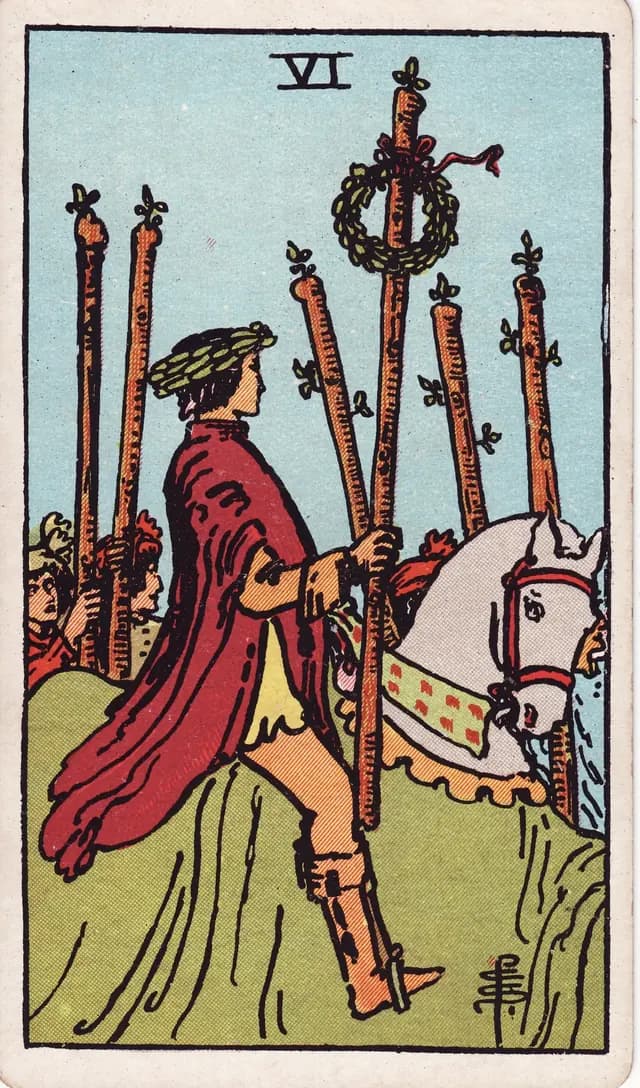
What Six of Wands yes or no means
Upright: Yes, because your clear progress earns support and recognition.
Reversed: Leaning no, because your effort still lacks the needed recognition.
The Six of Wands upright receives Yes in the current map, connecting visible progress with recognition. Apply the answer to a step supported by work that can be shown and discussed. The rider's wreath gives your reading an image of achievement receiving attention beyond the person who completed it. Confirm the result and available support before deciding how far the next request can reasonably extend.
Reversed, the live answer is Leaning no because the needed recognition has not reached the effort clearly. Ask whether your next step depends on approval that remains unconfirmed or praise that has little practical substance. Separate the quality of the work from the audience response before deciding what needs attention. The orientations preserve the difference between recognized progress and a result whose acknowledgment remains incomplete or unsatisfying.
Explore Six of Wands with your own draw
Your draw can reveal any card in the deck.
In love
For love, upright Yes fits an action that expresses real appreciation and honors a connection both people acknowledge. Check your partner's comfort before making a private achievement or relationship moment visible to others. Reversed Leaning no asks whether outside approval has started taking the place of care within the bond. Examine the appreciation actually present, leaving questions about love or rejection for a direct conversation between you.
At work
At work, upright Yes supports presenting a completed result when the evidence and shared credit are clear. Ask whether your next request follows reasonably from that achievement instead of extending one success into unlimited readiness. Reversed Leaning no points toward missing acknowledgment or support that should be confirmed before relying on it. Keep the decision tied to the actual work and the people authorized to review its next stage.
Your next step
Phrase your question around sharing one achievement or seeking a specific acknowledgment that the work can support. Gather the relevant result and name the contribution that you want the audience to recognize. Use upright Yes to consider a clear presentation with fair credit for everyone involved. With reversed Leaning no, resolve the missing acknowledgment before making another commitment that depends on already having it.
- upright yes
- reversed leaning no
- recognized progress
- confirmed support
The image behind this reading
You can see the red cloak spread behind the rider above the horse's green covering.[1]
Read these meanings as modern interpretations of the imagery in your 1909 Rider-Waite-Smith deck.