
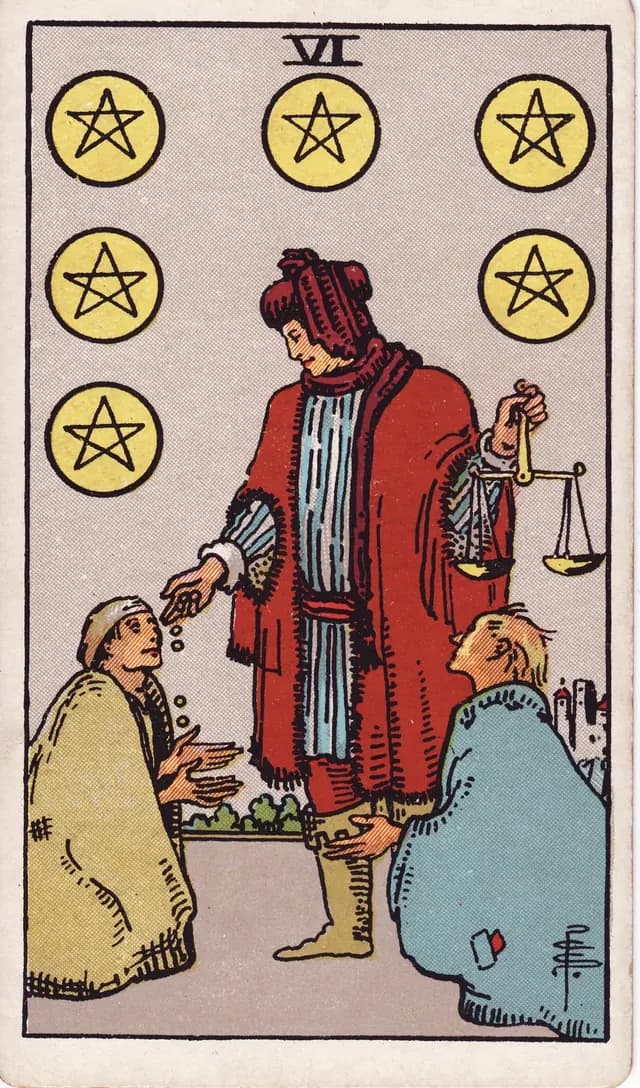
What Six of Pentacles as a person means
As a person, the Six of Pentacles describes someone attentive to sharing resources and meeting practical needs. This pattern appears when you offer useful help without deciding that receiving makes another person less capable. The scales beside the giving hand keep fairness part of the image of generosity. Practice this behavior through listening and clear limits, keeping care respectful whether offering help or receiving it.
A generous person can notice a need without making the entire situation about their own contribution. They ask what would help, consider your answer, and explain what they can reasonably provide. That strength needs balance when being needed becomes more important than the other person's independence. Useful help leaves the receiving person room to choose, without turning the giver into a permanent authority.
Explore Six of Pentacles with your own draw
Your draw can reveal any card in the deck.
In love
In relationships, this pattern shows through a willingness to give care and receive it without keeping score. A partner who listens to your needs can adjust their contribution as circumstances change for either person. Discuss what feels fair, especially when one person temporarily has more time or resources. Let care take different forms, so a responsive bond can adjust without demanding identical returns for every contribution.
At work
At work, this person can share knowledge and resources in ways that make your team more capable. A useful explanation gives someone enough understanding to handle the next similar task with greater independence. Make room for their limits so helpfulness does not become an expectation of constant availability. Shared ability grows when help explains the process, while clear credit acknowledges who contributed to the actual result.
Your next step
Before offering help, ask which part of the situation the other person would like support with. State the contribution you can make and allow them to accept only what is useful. Practice receiving a small kindness without immediately turning it into a task you must repay. A balanced role leaves both people free to share within capacity, valuing receiving alongside the act of giving.
- thoughtful giver
- fair sharing
- respectful help
- comfortable receiver
The image behind this reading
You can see an open palm raised beneath the giver while another kneeling figure waits nearby.[1]
Read these meanings as modern interpretations of the imagery in your 1909 Rider-Waite-Smith deck.