
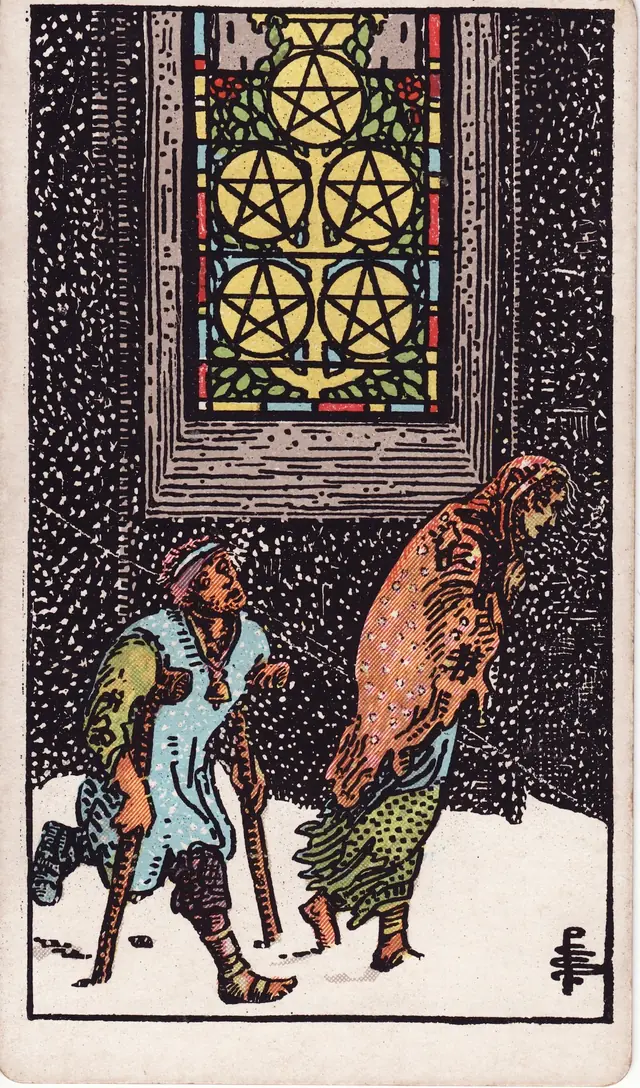
What Five of Pentacles as a person means
As a person, the Five of Pentacles describes behavior shaped by strain and sensitivity to exclusion. Someone expressing this pattern can notice overlooked needs and stay beside others through difficult circumstances. The two walkers give companionship within hardship a visible form, without defining anyone by their resources. Treat this as changeable behavior, with receiving care just as relevant as the support you give others.
A person familiar with going without can become especially alert to who feels left out. They might suggest an affordable activity so your group can include someone facing practical limits. That considerate strength needs balance when asking for their own help feels harder than providing it. A considerate act can express shared care without making a difficult experience someone's permanent identity or social role.
Explore Five of Pentacles with your own draw
Your draw can reveal any card in the deck.
In love
In relationships, this pattern can appear through staying present when daily life becomes difficult. A partner who notices your strain and offers quiet company gives companionship a concrete form. Encourage both people to state their needs, so loyalty does not require silently carrying every burden. Choose a simple way to check in, giving each partner a turn to describe the day without interruption.
At work
At work, this person can be alert to teammates missing information, equipment, or a chance to participate. They might check whether your quieter colleague received the same materials before a meeting begins. Support that attentiveness with clear shared processes, so one person does not have to repair every omission. The Five's practical strength is noticing exclusion, while fair access remains a responsibility the whole team should share.
Your next step
Notice where you offer help readily but dismiss your own need for a similar contribution. Choose a small request that another person can understand and answer without guessing the full situation. Accept an appropriate offer without immediately promising to repay it through more effort than was requested. This Five invites mutual care, where being a dependable companion includes allowing someone else to stand beside you.
- considerate companion
- noticing exclusion
- shared care
- receiving help
The image behind this reading
Your eye can find the front walker wrapped in a worn cloak beneath the tall window.[1]
Read these meanings as modern interpretations of the imagery in your 1909 Rider-Waite-Smith deck.