
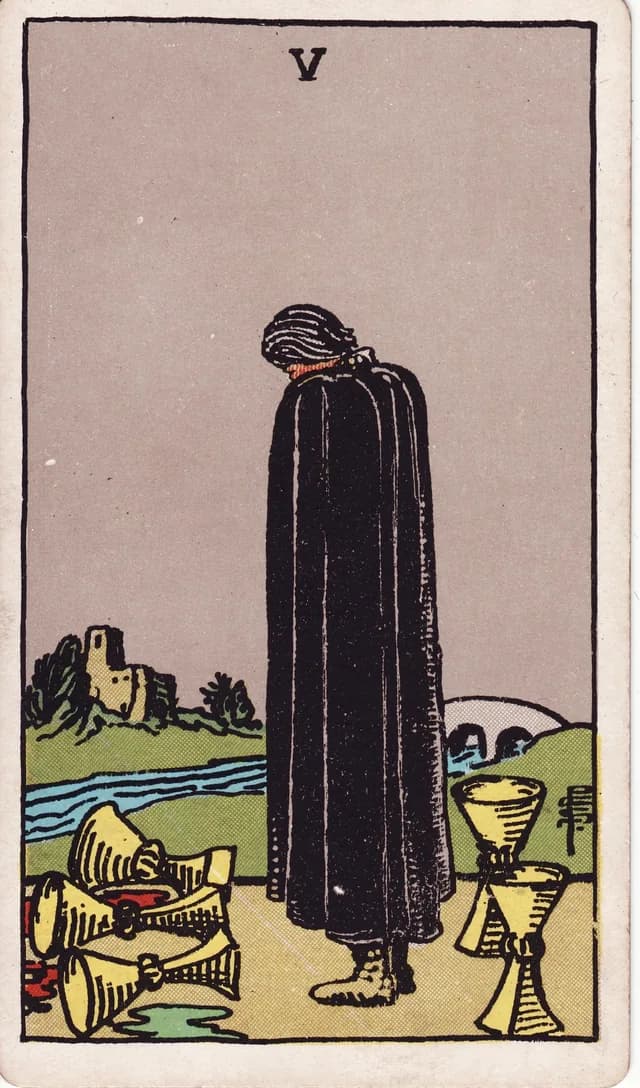
What Five of Cups as a person means
The Five of Cups as a person describes someone who takes disappointment seriously and remembers its emotional cost. Their attention can remain with what failed even when others have already moved to another subject. Notice where your sensitivity helps acknowledge a real loss and where it narrows the whole picture. This changeable pattern concerns attention and response, without making sadness a fixed description of someone's character.
A friend remembers the canceled occasion long after everyone else begins planning a different gathering. They can explain why it mattered, giving a disappointment words that the group had skipped. Invite them to tell you why it mattered and what contact would feel welcome now. The Five's depth adds value when recognition of the loss leaves room for present company as well.
Explore Five of Cups with your own draw
Your draw can reveal any card in the deck.
In love
As a partner, this pattern notices broken promises and needs acknowledgment before another cheerful plan feels convincing. Ask which specific event still matters instead of telling the person they focus too much on disappointment. Share your experience too, so listening does not become an agreement that the relationship contains only loss. The Five's growth involves holding the hurt and remaining care together within the same honest conversation.
At work
At work, this person can remember lessons from unsuccessful projects that an eager team would otherwise overlook. Invite a focused review of what failed and ask which lesson should change your next attempt. Give the review a clear purpose so disappointment does not become the only account of the team's ability. Their careful memory becomes useful when it protects learning while leaving space to test a revised approach.
Your next step
Practice describing a disappointment without turning it into a statement about everything that is available to you. Name the specific loss, then identify a relationship or skill that the event did not remove. Ask what each fact needs, allowing acknowledgment for one and a practical use for the other. A wider view can develop without requiring a serious response to become a performance of constant cheerfulness.
- sensitive witness
- lasting regret
- careful memory
- widening perspective
The image behind this reading
You can follow the long black cloak from the bowed shoulders down toward the figure's boots.[1]
Read these meanings as modern interpretations of the imagery in your 1909 Rider-Waite-Smith deck.