
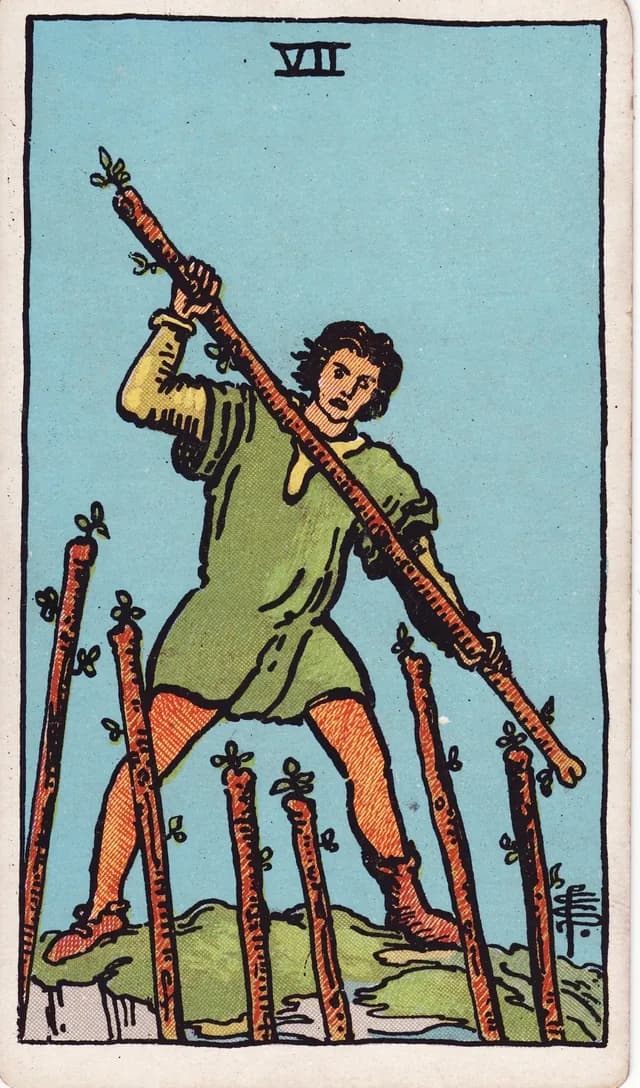
What Seven of Wands as intentions means
The Seven of Wands as intentions suggests a possible plan to defend a chosen position or limit. The focus is holding ground already claimed rather than starting a new contest for its own sake. Ask what the person intends to preserve and how their action will affect your choices. A stated boundary shows the plan's scope, while responses to future challenges remain choices the person must make.
Someone tells a group that an agreed deadline cannot absorb another task without a change in scope. They name the limit, explain the reason, and offer a practical route for reviewing new requests. Check whether your understanding of the boundary matches the arrangement that was actually agreed. Consistent application gives the limit practical meaning while leaving room to review it if the circumstances change.
Explore Seven of Wands with your own draw
Your draw can reveal any card in the deck.
In love
In love, the possible plan is to preserve an agreed relationship boundary when outside opinions become demanding. Ask your partner which information should stay private and who will respond to the next intrusive question. A joint plan needs both people's consent before either person speaks on behalf of the bond. Distinguish protecting a shared choice from refusing every conversation about whether the arrangement still works for both people.
At work
At work, this card suggests an intention to defend a role, standard, or decision with clear supporting facts. Ask which part of your project the person wants to preserve and which parts remain open to revision. A useful defense explains the tradeoff instead of treating a competing proposal as an insult. Watch whether they follow the review process and respond consistently when the next challenge reaches the team.
Your next step
Ask the person stating a limit to explain what it covers and when it will be reviewed. Name your own responsibilities so the boundary does not silently transfer extra work onto you. Confirm a practical response to the next challenge, including who has authority to decide an exception. Judge the intention through that follow-through while leaving room for a revised position when new information deserves attention.
- stated boundary
- held position
- consistent defense
- clear scope
The image behind this reading
Follow the diagonal wand across the figure's body as you notice both hands holding it.[1]
Read these meanings as modern interpretations of the imagery in your 1909 Rider-Waite-Smith deck.