
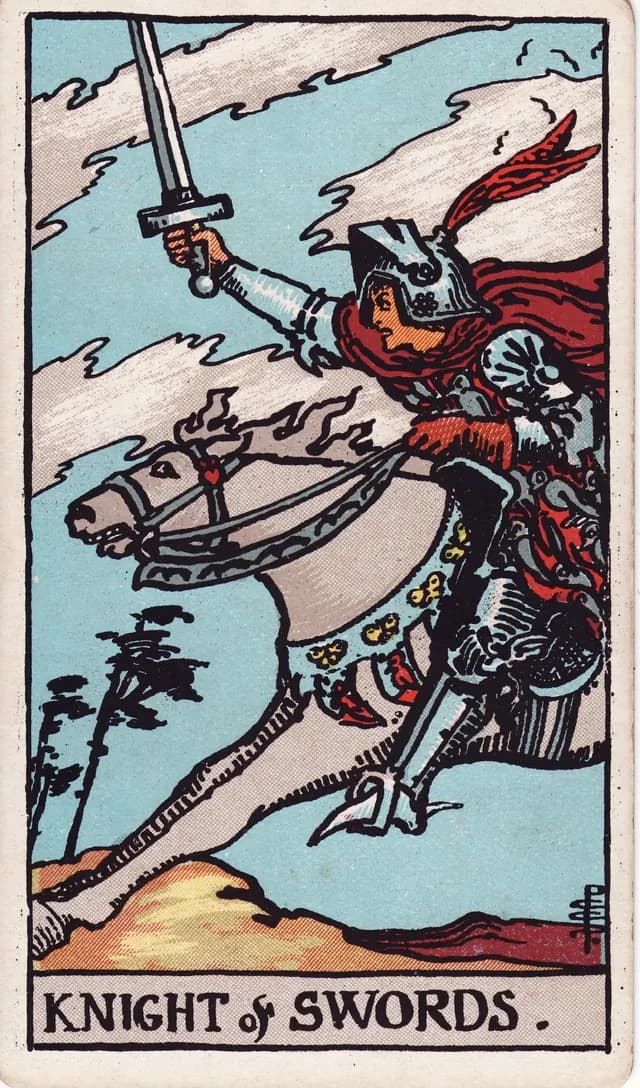
What Knight of Swords yes or no means
Upright: Maybe, because your strong drive still needs a clear path.
Reversed: Leaning no, because your haste has run ahead of preparation.
Upright, the Knight of Swords receives Maybe because strong momentum does not settle how the path will develop. Apply the answer to your proposed action and the information supporting its speed right now. A clear purpose can justify moving promptly while leaving uncertainty about the response and wider result. The horse’s charge supplies a movement theme, without turning a forceful approach into guaranteed success.
Reversed, the answer is Leaning no because haste has moved ahead of the preparation the situation needs. Ask which unchecked detail your present pace makes easier to miss before committing others to the decision. The classifications distinguish directed energy from a rushed approach instead of treating every reversal as an automatic opposite. A practical condition is enough clarity to explain both the next step and its consequences.
Explore Knight of Swords with your own draw
Your draw can reveal any card in the deck.
In love
For a question about speaking openly, upright Maybe allows a direct approach that respects your partner’s choice. Keep the invitation clear and leave enough time for an answer that differs from your own. Reversed Leaning no asks whether urgency is turning the conversation into pressure or a harsh demand. Neither answer establishes affection or consent, which must come through the actual words and choices of those involved.
At work
A work proposal fits upright Maybe when your drive is strong but the route still contains uncertainty. Check the brief and define a limited action before assuming a confident launch settles every concern. Reversed Leaning no points toward a missing review or instruction that could make rushed action costly. The useful condition is a prepared first step, with the pace adjusted to what the team actually knows.
Your next step
Write the action you are considering and the reason it needs to happen at this pace. Separate a real deadline from discomfort about waiting for someone else to finish their answer. Check one decision-changing fact before making the move, then choose a scope the evidence can support. The Knight turns its uncertain answer into a review of direction instead of another reason to race ahead.
- driven maybe
- reversed haste
- clear purpose
- prepared action
The image behind this reading
You can see the horse’s flying mane below long pale clouds crossing the sky diagonally.[1]
Read these meanings as modern interpretations of the imagery in your 1909 Rider-Waite-Smith deck.