
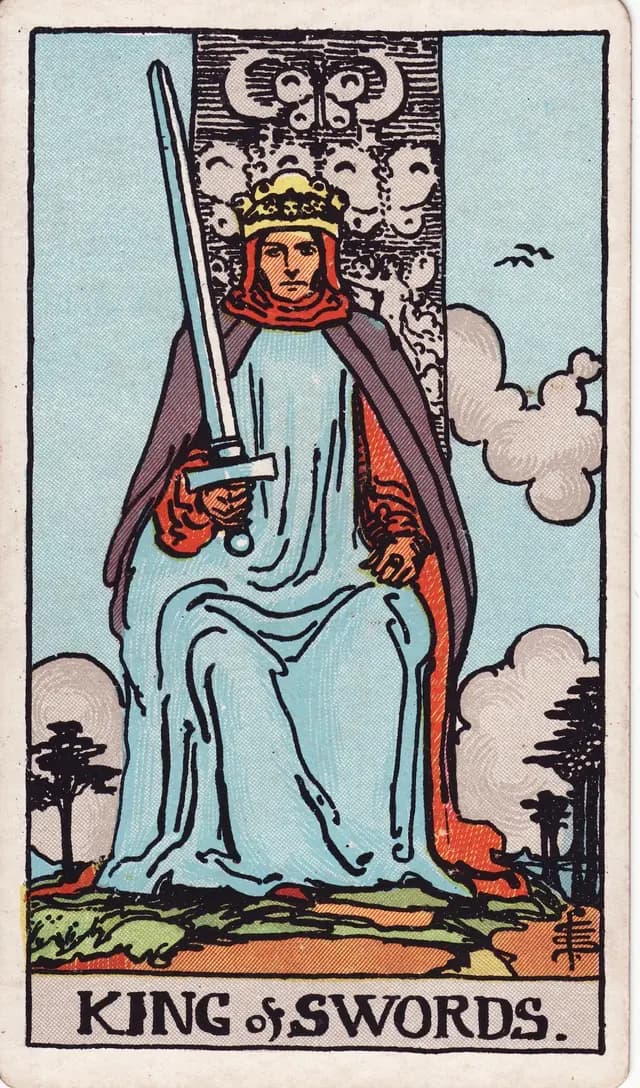
What King of Swords as intentions means
The King of Swords as intentions suggests a possible plan to make a considered, clearly explained decision. Someone could want to establish terms, review evidence, or settle a disagreement through an agreed process. Treat this as a working reading until the person states what they intend to do. A fair proposal becomes meaningful for you when responsibility, timing, and the next action are actually clear.
Picture someone offering to resolve a shared problem by reviewing the facts with everyone affected. The king's approach would define the question and explain how the final decision will be reached. Ask whether your evidence receives the same attention as the account offered by someone more influential. The process itself tests the intention, since a promise of fairness does not prove fair conduct.
Explore King of Swords with your own draw
Your draw can reveal any card in the deck.
In love
In love, this king points toward a possible wish to define commitments through a serious conversation. Ask what the proposed agreement means for time, contact, and choices that affect you both. A fair plan gives each person room to question terms before accepting any shared responsibility. Follow-through after the conversation matters more than a confident claim that everything has already been thought through.
At work
At work, the king's possible intention involves a clear decision process and named responsibility for the outcome. Request the criteria, evidence, and deadline so you can assess the proposal on its merits. A leader who intends fairness should make the review process understandable to those it affects. Check whether concerns receive answers and agreed steps occur before treating the plan as an established commitment.
Your next step
Ask the person to describe the next action and the standard they will use to choose. Compare that standard with your own needs, including a fair opportunity to raise relevant concerns. The king's sword suggests a definite decision, but the reading cannot supply a date or guarantee. Set your own next step around the evidence available, and revise it when actual conduct changes.
- considered plan
- clear criteria
- stated responsibility
- fair process
The image behind this reading
You see the king's raised sword leaning slightly left while his other hand rests beside him.[1]
Read these meanings as modern interpretations of the imagery in your 1909 Rider-Waite-Smith deck.