
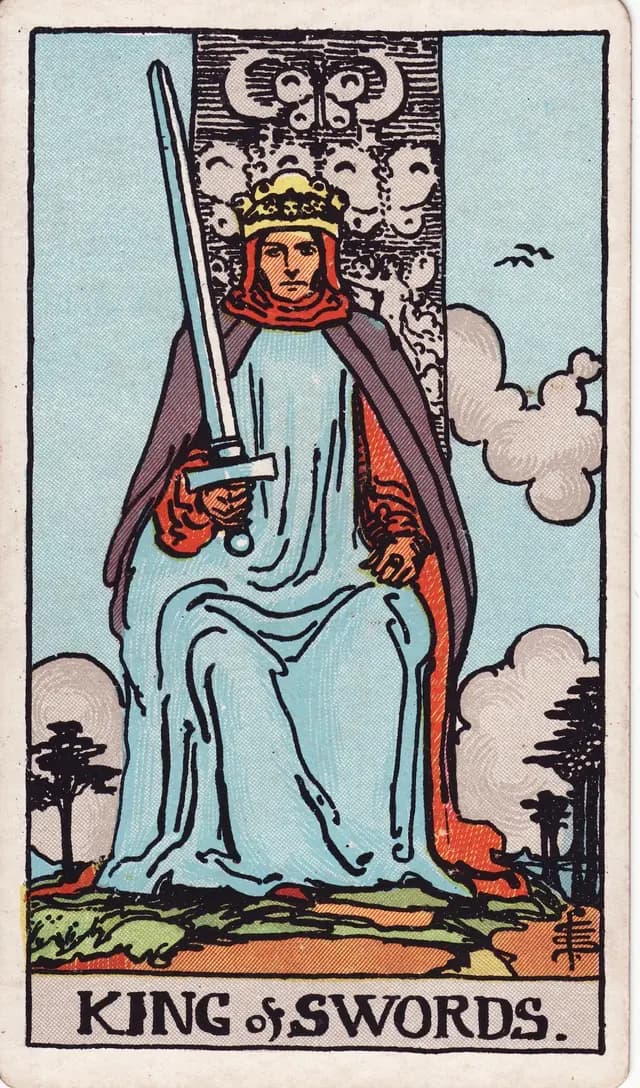
What King of Swords as a person means
The King of Swords as a person describes a pattern of reasoned leadership and consistent standards. Someone showing this pattern explains a difficult decision and accepts responsibility for its practical effects. Look for fairness in the way you apply rules, especially when the outcome becomes personally inconvenient. The card describes behavior that can develop through practice, rather than a fixed rank or permanent character label.
During a disagreement, this person can bring structure by separating the disputed facts from personal reactions. The strongest version gives every relevant account a fair hearing before reaching a firm conclusion. Notice whether you can explain another person's objection accurately even when you disagree with it. That ability keeps the king's authority rooted in understanding rather than the wish to dominate a room.
Explore King of Swords with your own draw
Your draw can reveal any card in the deck.
In love
As a partner, the king's pattern values clear agreements and calm discussion when important choices arise. Shared rules work when you both understand their purpose and remain free to ask for changes. The growth area appears when explaining becomes lecturing and feelings are treated as faulty arguments. Make room for comfort as well as solutions, so careful reasoning serves the bond you are building.
At work
At work, this person earns authority by making decisions others can understand and question without punishment. Clear criteria help you review a proposal without allowing personal preference to quietly move the target. Their strongest leadership also acknowledges limits and seeks relevant expertise when the facts exceed their knowledge. A title alone does not establish this pattern, since consistent fairness must be visible in ordinary decisions.
Your next step
Choose one decision where others rely on your judgment, and explain the standard behind your choice. Invite a relevant objection before finalizing the plan, then answer it using the same stated criteria. The king's raised sword represents a clear call, while his seated posture suggests considered rather than rushed authority. Practice owning the result openly, including any correction needed when later facts change the picture.
- reasoned leadership
- consistent standards
- fair authority
- clear responsibility
The image behind this reading
You can trace the carved throne behind the king's crown and the trees below either side.[1]
Read these meanings as modern interpretations of the imagery in your 1909 Rider-Waite-Smith deck.