
What Four of Pentacles yes or no means
Upright: Leaning no, because your tight hold leaves little room.
Reversed: Maybe, because your grip is easing but trust needs time.
Upright, the Four of Pentacles receives Leaning no in Naksham's current yes or no map. The answer reflects a tight hold on the present that leaves your proposed change little room. Ask what must stay protected and what can move before pressing for a new commitment. The cautious direction concerns restricted movement, while a sensible boundary can still protect something worth keeping.
Reversed, the Four receives Maybe as the grip begins to loosen without a settled new balance. More openness can create room for your question, but it does not establish a ready agreement. Check whether the proposed step has clear limits and willing support from everyone involved. A measured release creates something to assess, provided the new terms remain clear and freely chosen.
Explore Four of Pentacles with your own draw
Your draw can reveal any card in the deck.
In love
A relationship question meets upright Leaning no when the proposed step requires openness that feels restricted. Ask whether your wishes can be discussed without one person deciding every acceptable outcome beforehand. Reversed Maybe leaves room to explore a small change that both people can freely accept. Neither label establishes another person's love, so actual willingness and respectful boundaries remain necessary for any shared decision.
At work
For a work proposal, upright Leaning no directs attention toward resources or decisions held too tightly. Clarify which limits are fixed before putting more effort into a plan without usable authority. Reversed Maybe suggests your discussion can include a smaller handover or a carefully defined trial. Evaluate the actual permission and support available, using the Four to examine whether the proposed change has room.
Your next step
Name the change at the center of your question and the resource it would require. Separate a genuine limit from a familiar rule that nobody has reviewed for some time. Ask whether one small adjustment could be agreed without weakening the protection that still matters. A useful limit has a stated purpose, making it easier to distinguish protection from an automatic refusal.
- upright caution
- reversed maybe
- room for change
- measured release
The image behind this reading
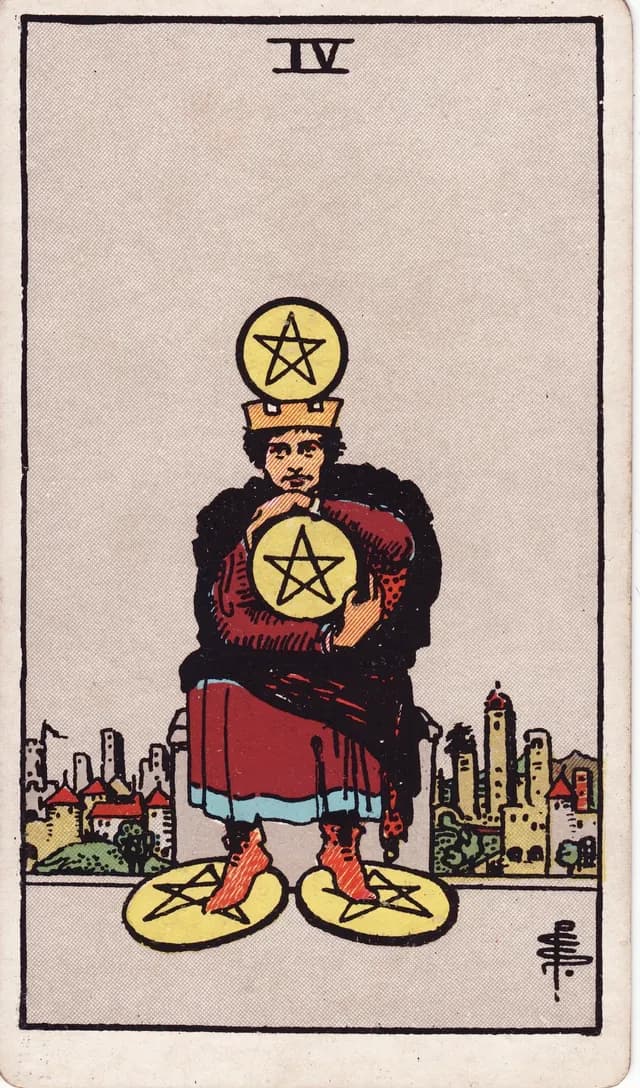
Your eye can trace the coin above the crown and the two coins beneath the feet.[1]
Read these meanings as modern interpretations of the imagery in your 1909 Rider-Waite-Smith deck.